

by ZHU Yongling
China's leading childrenswear brand Balabala is expanding into Europe, betting it can carve out a place between premium labels and low-cost retailers despite a shrinking market.
Owned by Semir Group, Balabala recently opened its first European store in Rome, adding the region to an overseas footprint that already spans Southeast Asia, the Middle East and Central Asia.
The expansion comes as Europe's childrenswear market faces demographic headwinds. According to Euromonitor International, the market in Western and Eastern Europe is expected to contract by an average of 0.4% and 0.7% annually, respectively, between 2026 and 2028, as birth rates continue to decline.
Balabala believes the market is increasingly split between luxury brands and budget offerings, leaving room for players positioned in the middle.
Its pricing strategy reflects that view. Based on products displayed at its Rome store, Balabala sits below premium French childrenswear label Jacadi but above brands such as Okaidi and Obaibi, with prices broadly comparable to Zara Kids.
A report by the Centre for the Promotion of Imports from developing countries (CBI) noted that luxury childrenswear accounts for a relatively strong share of Italy's market, underscoring the country's longstanding appetite for higher-end products.
Unlike many Chinese fashion brands that have entered Europe through cross-border e-commerce, Balabala is pursuing a brick-and-mortar strategy through a local distributor partnership.
Under the arrangement, the Italian partner manages store operations, channel development and local merchandising, while Balabala oversees product development, branding and marketing.
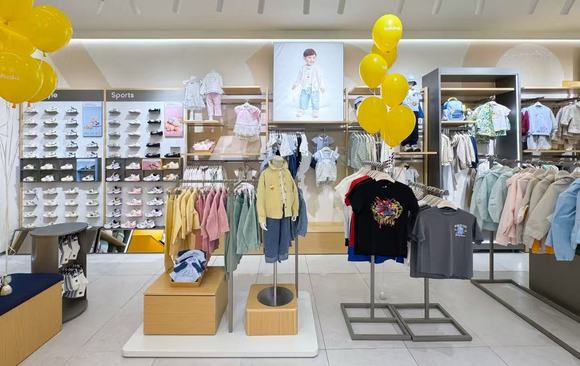
The model also helps navigate Europe's regulatory requirements and local consumer preferences.
The company said European consumers generally favor brighter colors and more elaborate patterns than Balabala's traditionally understated designs. Product standards are also more demanding. The European Union's REACH regulations impose some of the world's strictest requirements on chemicals used in consumer products, including children's clothing.
Sustainability expectations present another challenge. European regulations increasingly require fashion companies to contribute to textile waste management, while second-hand childrenswear and clothing rental services have become more common across the region.
Meeting those standards can add costs for brands seeking to expand in Europe.
Balabala's first European store is located alongside established brands including Jacadi, Twinset, Original Marines, Okaidi-Obaibi, Zara Kids and Italian retailer Prenatal.
Even established players are facing pressure. French childrenswear group IDKIDS, which owns Jacadi, Okaidi and Obaibi, sought bankruptcy protection earlier this year, highlighting the challenges confronting the sector.
Few Chinese childrenswear brands have established a meaningful offline presence in Europe. While SHEIN and children's apparel platform PatPat sell into the region through online channels, most Chinese brands have stopped short of building local retail networks.
Compared with sportswear and adult fashion brands, Chinese childrenswear companies have generally been slower to expand overseas.
According to Lan Tian, senior apparel and footwear analyst at Euromonitor International, Balabala remains among the leaders in China's childrenswear market, competing alongside brands including Anta, Uniqlo, Fila and Adidas.
The company's overseas revenue reached 127 million yuan (US$18.7 million) in 2025, accounting for less than 1% of total sales.
A stronger presence in Europe could help Balabala build credibility in one of the world's most influential fashion markets, strengthening its position in China and other overseas markets.
The company and its Italian partner plan to open around 30 stores across Italy over the next five years, with additional locations in Rome and Milan already in preparation.