

by FANG Zhuoran
A shaggy-looking topiary dog made from moss and flowers has become one of Shanghai's biggest spring attractions — and a surprisingly effective economic engine.
The "scruffy dog," installed at Suhewan MixC World during this year's Shanghai International Flower Festival, drew massive crowds over the May Day holiday. On May 1, the mall recorded 150,000 visitors in a single day, a new high since opening.
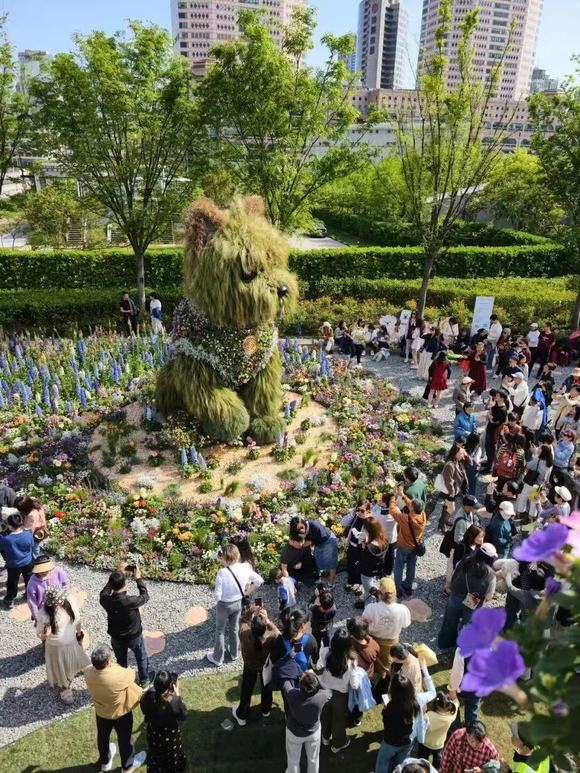
Nearby restaurants and shops benefited immediately. One Jiangxi restaurant saw wait times stretch to nearly two hours as foot traffic surged.
The viral installation has become the unofficial mascot of a broader transformation underway in Shanghai: turning a once niche flower exhibition into a citywide consumption festival.
This year's Shanghai International Flower Festival opened on April 18 with two main venues and 10 satellite sites across the city. Organizers expected more than 10 million visits during its 23-day run and projected a double-digit boost in spending tied to tourism, retail and entertainment.
Official figures suggest the event is already outperforming expectations. Within the first nine days, the festival logged 8.52 million visits. At Suhewan MixC World alone, sales rose 48.4% year-on-year, while 23 stores posted record revenues.
Other floral animal sculptures — including hedgehogs, giraffes and foxes in Pudong's Qiantan area — also went viral online, attracting crowds of visitors and pet owners eager to take photos.
But beyond the social-media buzz, the festival marks a strategic shift in how Shanghai approaches large-scale public events.
The festival evolved from the Shanghai International Flower Show, which launched in 2007 and largely followed the model of traditional horticultural exhibitions centered inside Shanghai Botanical Garden.
That model eventually hit limits. While professionally respected, the event remained relatively isolated from everyday city life.
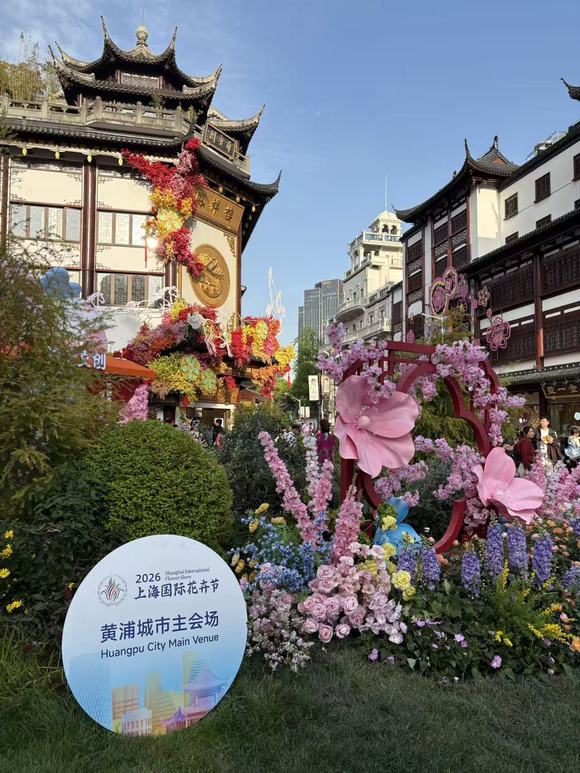
The turning point came in 2025, when organizers expanded beyond the botanical garden and distributed venues across commercial districts. The move attracted nearly 10 million visitors and significantly boosted traffic and spending in shopping areas including Xintiandi and Qiantan.
This year, the city doubled down.
The number of satellite venues expanded, while 34 shopping districts joined the festival with more than 150 related events, markets and installations.
Instead of asking residents to visit a park for flowers, Shanghai is now scattering them through malls, restaurants and shopping streets, folding the festival into everyday urban life.
YANG Yao, director of commerce at the Shanghai Municipal Commission of Commerce, described the festival as a "big show" integrated into commercial space.
That strategy is visible across the city. Along Nanjing East Road, department stores unveiled floral-themed display windows and city walk routes designed to encourage visitors to linger, share photos online and spend along the way.
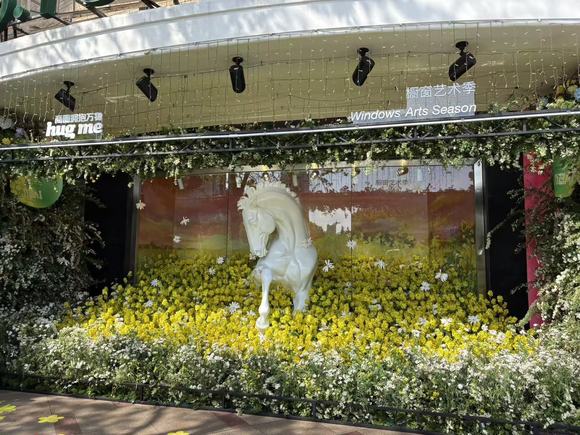
The approach aligns with China's fast-growing "city walk" trend, where leisurely urban strolling has become a form of lifestyle consumption.
For local businesses, even small installations can generate outsized results. A tailor shop in Huangpu district reportedly doubled customer traffic and sales within a week after launching a floral display window.
Behind the festival's expansion is a new experiment in market-driven event operations.
In March, Wanhua (Shanghai) Urban Operations Management — a company backed by state-owned Shanghai Construction Group — was established to oversee professional operations for the festival.
LU Zhihua, a director at the company, told Jiemian News the goal is to shift the event from "government-led with market participation" toward a more market-oriented model.
The core logic is simple: shopping malls and brands fund installations because the festival drives traffic and consumption in return.
"If both models mature, sponsorship will continue growing," Lu said. Large commercial complexes could eventually become headline sponsors, while smaller lifestyle brands join as participants, creating a self-sustaining cycle.
Some companies are already treating the festival as a business opportunity.
At Xintiandi, a "Creator Garden" installation was funded through partnerships involving Shui On Group, Xiaohongshu and Yuyuan Inc. In Qiantan, restaurant chain Blue Frog paid for its own flower installation outside the store after benefiting from last year's event.
So far, the results suggest the model is working. Officials say the festival's midterm economic impact is already approaching last year's full-event total.
But the larger ambition goes beyond flowers.
Shanghai is using the festival to explore how cities can build recognizable urban IP, activate public space and turn viral social moments into long-term consumption and tourism growth.
Lu described the festival as both a future international city brand and a form of urban therapy.
"This year we included many healing-themed garden installations," he said. Even the word "scruffy" in "scruffy dog" carries what he called a slightly therapeutic feeling.