From humanoid robots serving drinks to driverless taxis, the gathering offered Chinese companies a platform to showcase emerging technologies to overseas visitors.

by LU Keyan
Chinese technology companies brought humanoid robots, delivery drones, driverless taxis and AI-powered devices to the Asia-Pacific Economic Cooperation (APEC) summit in Shenzhen, showcasing their products to overseas delegates and journalists as they push to commercialize new technologies and expand abroad.
The 33rd APEC Economic Leaders' Meeting, held on November 18 and 19, brought together some of China's leading hardware makers and robotics start-ups in the southern technology hub, which hosted the event as China took on the role for the first time in 12 years.
Nearly 5,000 journalists registered to cover the meeting week, while more than 2,000 government and business representatives attended the APEC CEO Summit.
At the media center, seven humanoid robots developed by Shenzhen-based AI² Robotics prepared coffee and ice cream, while robots from X Square Robot delivered refreshments. Nearby, DexForce robots served craft beer and bubble tea.
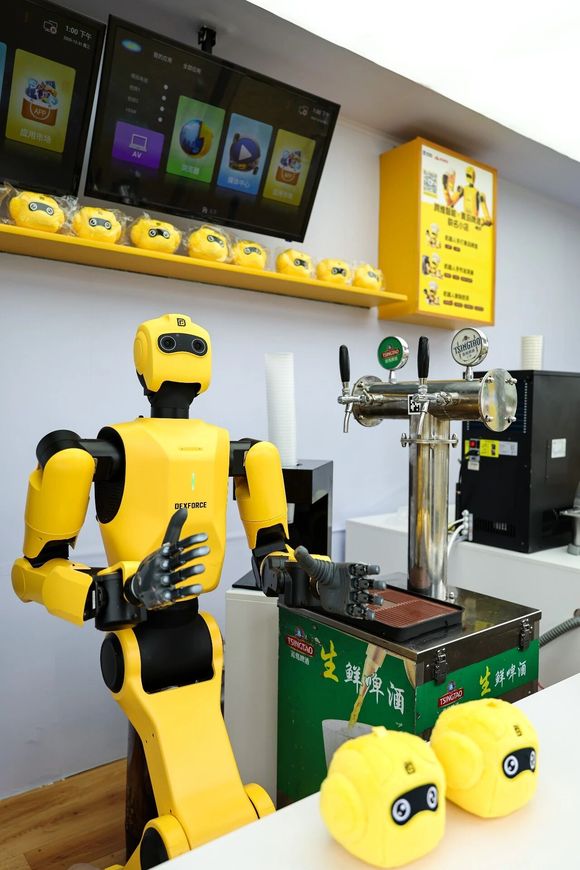
The three companies are among a growing number of Chinese embodied artificial intelligence start-ups seeking commercial applications for machines capable of interacting with physical environments.
AI² Robotics said its robots had begun regular paid operations at a bar in Hong Kong's Lan Kwai Fong district in August.
Its founder and chief executive, GUO Yandong, said the company had established varying degrees of business contacts and cooperation with more than a third of APEC's 21 member economies, including Singapore, Indonesia, South Korea and Australia.
Other Chinese robotics companies also featured at the summit. UBTech Robotics deployed its Walker C1 humanoid robot for reception duties, while Unitree Robotics demonstrated robots performing martial arts during a tour for overseas journalists.
Autonomous vehicles were also put to work beyond the conference halls.
Food-delivery giant Meituan, an official sponsor, deployed drones and autonomous delivery robots at Qianhai Stone Park. The company has operated drone deliveries in Shenzhen since 2021 and supports foreign-language interfaces and payments using overseas bank cards on its app.
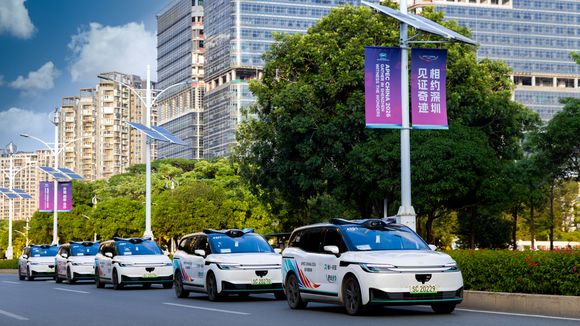
Baidu's Apollo Go robotaxis offered rides to summit participants and residents. The company has expanded its driverless services to Dubai and Abu Dhabi and obtained an autonomous-driving testing license in Hong Kong. Baidu said the service now operates in 28 cities worldwide.
Shenzhen-based Timekettle also supplied AI translation devices for use at airports, railway stations and border crossings. The company claimed a 40 per cent share of the North American market for translation devices.
Hardware makers showcase products to overseas visitors
The gathering also gave Shenzhen's established consumer electronics companies an opportunity to reach overseas journalists and business executives.
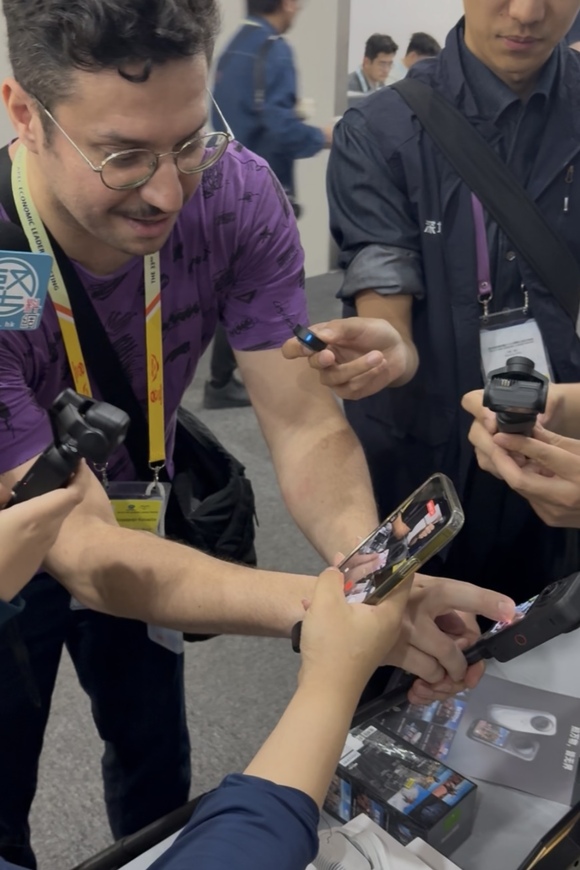
Camera makers Insta360 and DJI drew visitors at the media center, where compact imaging devices were used by journalists covering the event.
Insta360 told Jiemian News that its services had been used more than 1,000 times by media personnel at the summit, with 50 to 100 devices lent out daily.
Smartphone makers Vivo, Honor and Xiaomi were among the official sponsors. Vivo showcased its mobile journalism technology, while Honor displayed its Robot Phone, which combines a smartphone with a gimbal-based camera system.
Charging accessories maker Anker Innovations and portable power company EcoFlow also displayed products.
EcoFlow founder and chief executive WANG Lei said the price of comparable portable power products had fallen from US$1,300 in 2019 to less than US$500, reflecting technological advances and lower costs.
The company said more than 95 per cent of its revenue came from overseas markets, including the United States, Japan and Germany.
Outside the summit venues, overseas visitors explored Chinese products at INNO100, an innovation store jointly developed by crowdfunding platform Kickstarter and Shenzhen-based GoGlobal.
The store features more than 1,100 products from over 100 brands, around 80 per cent of them Chinese.
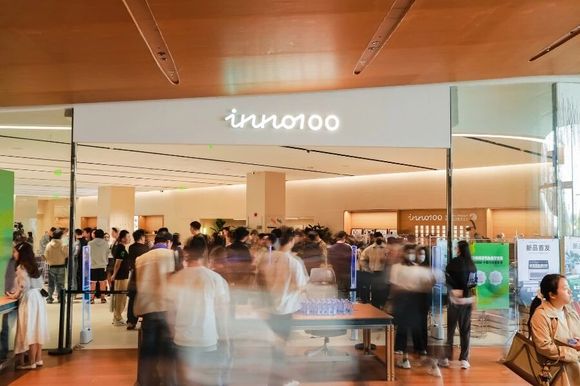
INNO100 told Jiemian News that visitor numbers exceeded 5,000 on peak days during APEC, with foreign visitors accounting for more than 30 per cent. AI translators, smart glasses and exoskeleton robots were among the most popular products.
For Chinese technology companies, expanding into overseas markets has long been a priority. The latest wave of AI innovation is opening up new possibilities, but turning emerging technologies into competitive products for global markets remains a key test.