As more foreign tourists seek experiences beyond sightseeing, small businesses in Shanghai are offering personalized encounters with local culture, from making soup dumplings to learning traditional crafts.

Photo from Jiemian News
by ZHOU Fangying
In a narrow alleyway in Shanghai's Xuhui district, YIN Wenhui leads a small group of foreign tourists to her cooking studio. Along the way, she stops to greet neighbors and shares stories about the neighborhood's history.
For Yin, these are ordinary moments in her daily life. For her visitors, they offer a glimpse of Shanghai beyond the usual tourist attractions.
Her business, Yin Studio, specializes in hands-on cultural experiences, particularly making xiaolongbao, the city's signature soup dumplings.
While many visitors are content to order a basket at a restaurant, others want to learn how the delicate wrappers hold both meat and hot broth, and how to fold the intricate pleats. They are willing to spend two or three hours making the dumplings themselves.
Michelle Lang, from Los Angeles, is one of them.
During a trip to Shanghai in June 2025, Lang found Yin Studio on the travel booking platform Viator. She initially signed up for a class making pan-fried beef buns with curry filling. She enjoyed it enough to return the next day to learn how to make xiaolongbao.
A year later, she returned to Shanghai and sought out Yin again, this time booking a broader Chinese cooking class.
Lang told Jiemian News that Yin went beyond demonstrating recipes, explaining the techniques and finer details of Chinese cooking. She appreciated being able to take home skills rather than just memories.
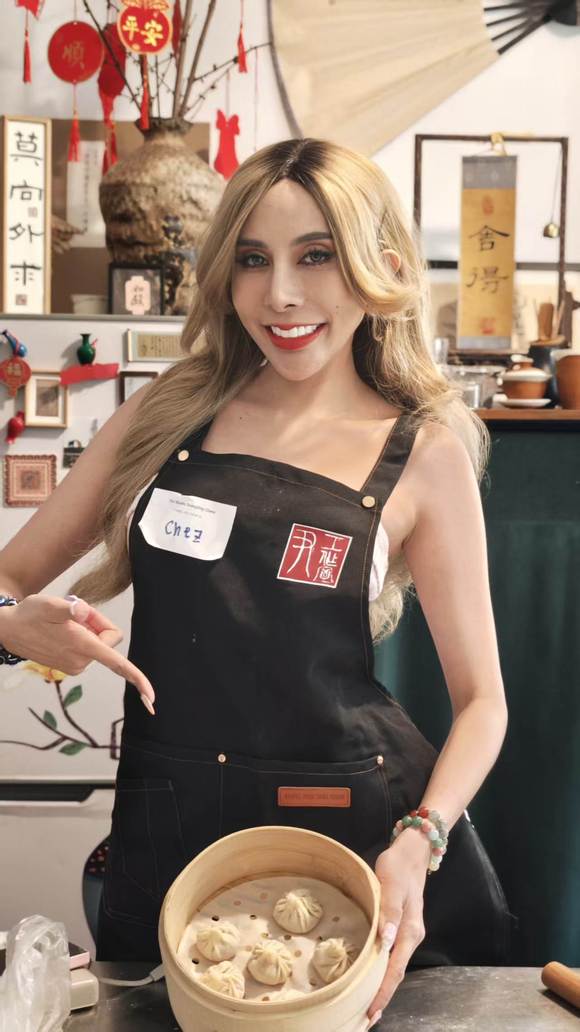
Chez, a visitor from Manila, had a different reason for booking.
Her Shanghai itinerary included Disneyland, a wildlife park, skiing and sampling crayfish. But she wanted something she could not easily experience elsewhere.
After hearing about Yin Studio from a friend, she found its classes on GetYourGuide. Learning to make a traditional Chinese dish, she told Jiemian News, would make her trip more memorable than another visit to an amusement park or zoo.
Yin did not originally learn Chinese pastry-making with tourists in mind.
Growing up in Jiangsu province, she was accustomed to breakfasts of steamed dumplings with sweet fillings and fish broth noodles. After moving to Shanghai, she struggled to find the flavors she remembered and decided to learn how to make them herself.
One interest led to another. She studied tea preparation because she believed Chinese pastries should be served with tea, then took up flower arranging to decorate the tea table.
Having previously taught Chinese as a foreign language, Yin gradually realized she could share these skills with international visitors.
About seven or eight years ago, she began organizing Chinese pastry workshops, initially borrowing a friend's tearoom or using a meeting room at an art gallery in Shanghai's M50 creative district.
Around 2022, she established her current studio in a traditional alleyway, removing the existing furniture and gradually transforming the space into a classroom where guests could cook together.
Her teaching background has shaped how she runs the business.
Some customers want to experience every step, from kneading the dough to folding the dumplings. Others have flights to catch and need to finish within two hours. Yin discusses their schedules in advance, deciding which steps can be prepared beforehand and which should remain hands-on.
She also accommodates requests beyond her regular menu. When a German guest mentioned a dish of shredded potatoes cooked with millet that he had eaten in Shanxi province, Yin sourced millet from the region and researched how to prepare it.
The classes sometimes become part of family celebrations.
During one workshop, Yin learned that a guest's daughter was celebrating her 12th birthday. She suggested cutting a cake while the dough rested. The family sang in Spanish and counted to 12, turning an ordinary cooking lesson into a birthday celebration.
Yin's business has evolved alongside the recovery in Shanghai's inbound tourism.
When she first opened the studio, most customers were foreigners living in Shanghai. It was not until mid-2024 that she noticed a significant increase in short-term visitors from overseas.
According to the Shanghai Municipal Administration of Culture and Tourism, the city received 9.36 million inbound tourist visits in 2025, up 39.58% year on year.
The Shanghai Statistics Bureau reported 7.06 million inbound international tourist visits in the first eight months of 2026, an increase of 27.8%.
The growing number of visitors has created opportunities for small businesses offering experiences beyond conventional sightseeing.
Shanghai's tourism authorities have introduced 45 urban walking routes featuring architectural heritage, local history and intangible cultural heritage, while promoting more personalized travel experiences.
The Bund and Yu Garden remain major attractions, but visitors are also seeking opportunities to explore residential neighborhoods, meet local people and learn traditional skills.
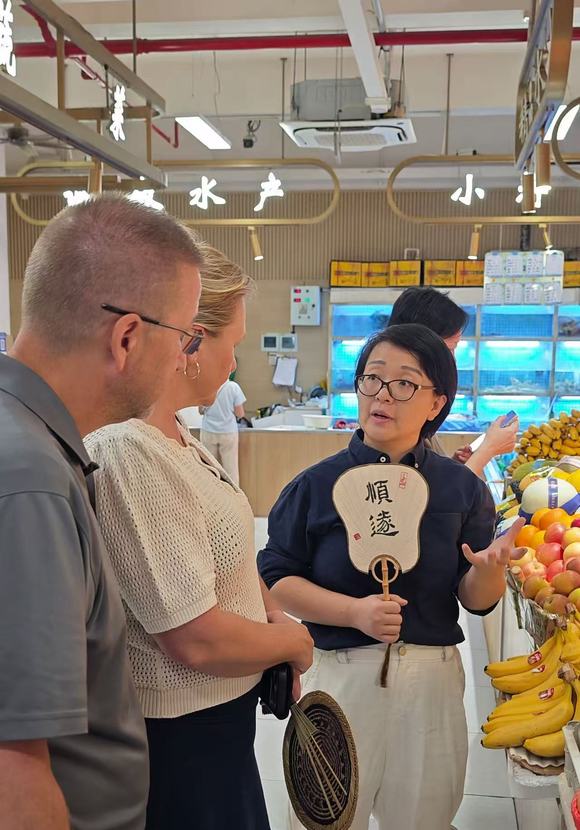
Yin Studio has expanded beyond cooking classes to offer calligraphy, tai chi, bamboo weaving and tea ceremonies through collaborations with specialist instructors.
Rather than teaching every activity herself, Yin brings together instructors and visitors, turning her small studio into a platform for cultural experiences.
Foreign customers now discover Yin Studio through a growing range of channels, including Viator, GetYourGuide, travel agencies, Tripadvisor and the studio's own website.
As overseas bookings increased, Yin began investing more effort in marketing. She built an independent website featuring customer stories and maintains accounts on Xiaohongshu and Instagram.
Travel platforms help small businesses reach international customers, but their commissions can push up the prices displayed to potential buyers, she said.
Direct bookings through her website allow her to reduce reliance on intermediaries.
Word of mouth remains particularly important.
Yin gives guests a ceramic coaster bearing the Yin Studio name and its overseas social media accounts. The small souvenir doubles as a reminder of the experience and makes it easier for customers to recommend the studio to friends.
She recalled one visitor who contacted her through the website but hesitated to book because there was not enough information available. Yin suggested reading customer reviews on Tripadvisor.
After doing so, the visitor booked five activities at once.
For a small independent studio without a substantial marketing budget, customer recommendations can be more persuasive than advertising. But the personal nature of the business also limits how quickly it can expand.
Yin has noticed that reviews frequently mention her by name.
Some people have suggested standardizing her classes and hiring more instructors to increase capacity. She is reluctant to do so.
Teaching someone to make xiaolongbao is relatively straightforward, she said. Whether guests enjoy the experience also depends on how the instructor explains the process and interacts with them.
That personal connection has become one of Yin Studio's main attractions, but it also makes expansion more complicated.
Rather than adding more classes, Yin prefers to maintain the quality of each experience.
For Lang, the American visitor who returned a year after her first lesson, that approach appears to have worked. When she came back to Shanghai, she remembered the little cooking studio tucked away in an alleyway — and wanted to spend a few more hours there.