China's designer fashion boutiques are shifting toward everyday clothing as changing consumer preferences, inventory risks and growing competition put pressure on their business models.

by ZHOU Fangying
At this season's Shanghai Fashion Week, a change was evident across designer showrooms: the experimental silhouettes and unconventional designs that once attracted fashion buyers were giving way to more wearable clothes.
Designers are placing greater emphasis on comfort, fabric quality and everyday versatility, reflecting a broader shift in consumer preferences that is reshaping China's independent fashion retail market.
The popularity of quiet luxury and the "old money" aesthetic has helped bring attention back to clothing quality and how often garments can be worn. One shopper told Jiemian News that she now favors pieces that work with her existing wardrobe over expensive outfits reserved for special occasions.
The shift is also apparent in luxury fashion. LVMH's fashion and leather goods division reported a 5% organic revenue decline in the third quarter of 2026, although its understated luxury brand Loro Piana continued to perform well. Ralph Lauren, another beneficiary of the classic, understated aesthetic, surpassed US$8 billion in revenue in fiscal 2026.
For China's multibrand designer boutiques, commonly known as buyer stores, the changing tastes pose a commercial challenge: how to remain distinctive while stocking clothes that customers will actually buy and wear.
SND, a Chinese designer fashion retailer with more than a dozen physical stores nationwide, recently opened its largest flagship concept store at Shanghai's Westbund Central.
The retailer told Jiemian News that wearable, everyday pieces now account for more than 70% of its business. But practicality does not necessarily mean uniformity, it said, with differences in fabric, tailoring and design details still allowing boutiques to develop a distinctive identity.

The shift follows several difficult years for China's independent fashion industry.
Around 2021, pandemic travel restrictions prevented Chinese buyers from attending ordering events in Paris, Milan and other international fashion capitals. Some purchasing budgets that would normally have gone to overseas brands were redirected toward domestic designers.
That temporary boost was followed by a shakeout. Some boutiques closed amid cash-flow problems, while designers increasingly brought unsold inventory from previous seasons to new trade shows.
SND said the number of Chinese designer labels it orders from has fallen to roughly 30% of its post-pandemic peak.
Jiemian News also observed that showrooms at Shanghai Fashion Week have generally become smaller and more selective. Some organizers are exploring additional businesses, including developing their own labels and expanding into upstream supply-chain services.
Official retail figures point to an increasingly divided market. In the first eight months of 2026, sales of clothing, footwear, hats and textiles at major retailers rose 5.1% year on year, while online apparel sales increased 4.9%, according to the National Bureau of Statistics.
By contrast, department store sales fell 3% and specialty store sales declined 10%.
Although the figures do not directly measure designer boutiques, they illustrate the pressures facing physical retailers. For stores serving relatively narrow customer groups and operating on long ordering cycles, retaining existing shoppers has become as important as discovering new designers.
Qingyu, who runs the boutique One Room Two Stores in Suzhou, entered multibrand womenswear retail in late 2025 after years of operating her own silk sleepwear label, Cherie soi.
She told Jiemian News that running a boutique requires a very different approach.
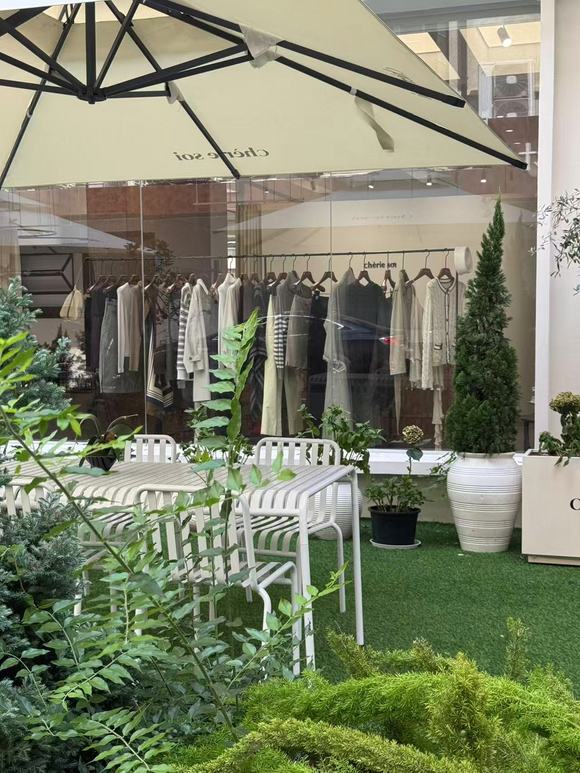
While her sleepwear brand needed only a handful of collections each year, the boutique must introduce new merchandise at least twice a month, alongside continuous photography, marketing and brand sourcing.
Inventory and cash flow are the bigger concerns.
Designer labels typically operate on advance orders, with spring and summer collections sometimes taking six months to arrive. Retailers must commit money long before they know how customers will respond.
Some labels require minimum orders of RMB50,000 to RMB100,000 (about US$7,000 to US$14,000), or even more, Qingyu said. Such commitments can be particularly risky for newer boutiques with limited customer bases.
She now places greater importance on a label's long-term stability, noting that a short-lived brand can be damaging not only to itself but also to retailers that have invested in promoting it.
Larger boutiques are increasingly turning to data to manage those risks.
B1OCK, a multibrand fashion retailer based at the OōEli complex in Hangzhou, strengthened its digital operations after being acquired by Chinese fashion group JNBY in 2024.
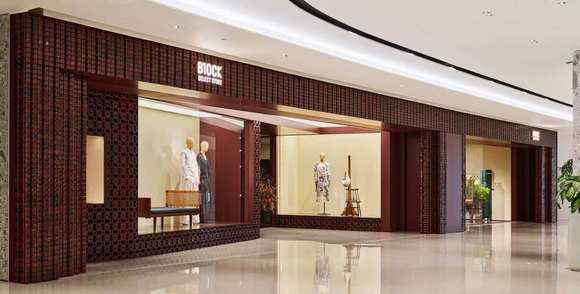
LIU Mengyi, B1OCK's co-founder and operations director, told Jiemian News that its team can now track individual products' sales performance and customer overlap between brands, using the information to refine purchasing decisions.
But Liu cautioned against relying entirely on sales data. Some labels may generate limited short-term revenue yet still deserve long-term support. Focusing exclusively on bestsellers, he said, risks eroding a boutique's identity.
The challenge is becoming more pronounced as distinctive design becomes accessible through a wider range of retail channels.
Mass-market chains such as Zara, Uniqlo and H&M have long collaborated with designers, bringing styles once associated with niche fashion labels to a broader audience at more affordable prices.
Meanwhile, Chinese womenswear brands that built their businesses online are expanding into physical retail.
CHIC JOC, KEIGAN, UNICA and CEST M, sometimes collectively described as Taobao's four leading premium womenswear labels, have attracted customers through minimalist designs, fabric quality and clearly defined brand identities.
CHIC JOC has established a network of physical stores, while UNICA opened its first brick-and-mortar location at Deji Plaza in Nanjing.
These developments are narrowing the distinction between independent designer boutiques and other fashion retailers.
SND also noted that many domestic designer labels have weaker resale demand and value retention than international brands, suggesting their brand recognition remains relatively limited.
As shoppers gain access to well-designed, quality clothing at competitive prices, the designer label or boutique designation alone is becoming less effective in justifying a premium.
Liu, who studied fashion design and worked as a buyer in Italy, recalled seeing more visually striking and experimental collections at major international fashion weeks a decade ago. He believes the growing commercial emphasis on sneakers, sweatshirts and casualwear among luxury brands has also encouraged younger designers to pursue more marketable products.
For independent boutiques, that convergence makes differentiation increasingly difficult.
Despite the commercial pressures, retailers are reluctant to abandon the creative identity that originally distinguished them.
B1OCK continues to stock a proportion of more experimental designs, with sales associates helping customers explore styles outside mainstream trends.
Liu argues that a multibrand boutique's value lies in its ability to combine pieces from different designers rather than limiting shoppers to the aesthetic of a single label.
SND is pursuing a broader retail strategy, operating avant-garde fashion concept stores alongside the more casual bySND format and its own clothing labels.
Both retailers are seeking to balance commercial appeal with a recognizable point of view.
Some industry participants also see opportunities beyond China's largest cities.
Showroom operators told Jiemian News that boutiques in major urban centers face intense competition from brand-owned stores and department stores. In smaller cities, where fashion options are more limited, a boutique with a strong understanding of local customers may have room to grow.
But scaling the business remains difficult.
"Running a buyer store is definitely not an easy business," Liu told Jiemian News, citing high inventory costs, cash-flow pressures and the need for detailed day-to-day management.
Expanding into a nationwide chain presents an additional challenge because individual stores must cater to different customer preferences while maintaining a coherent brand identity.
The role of the fashion buyer is consequently evolving. Discovering unfamiliar designers remains important, but selecting and combining pieces that resonate with a particular customer base is becoming an increasingly valuable skill.
For independent boutiques, success may depend less on appealing to the widest possible audience than on understanding a smaller group of shoppers exceptionally well.