Trust in doctors and personalized care bring foreign clients to Shanghai's aesthetic clinics, though medical tourism remains a small market.

by HUANG Hua
For Amir, a young Canadian of Indian descent, a visit to a Shanghai hospital resolved a problem that had troubled him for two decades: a lump on his forehead that had grown since a childhood fall.
Doctors in India had previously told him the lump probably involved bone and could not be removed, without first ordering a CT scan. But at Shanghai Jiahui International Hospital, imaging showed that the bone was normal. His doctor believed the lump involved soft tissue, possibly linked to an old hematoma, and could be removed through a relatively straightforward procedure.
Amir, a pseudonym, stayed overnight after surgery and paid more than 20,000 yuan (about US$2,800) out of pocket. By the time his stitches were removed, he said the longstanding problem had finally been resolved.
His experience offers a glimpse into Shanghai's emerging market for cosmetic medical services among foreign residents and visitors, although providers say demand remains limited and trust in doctors matters more than price alone.
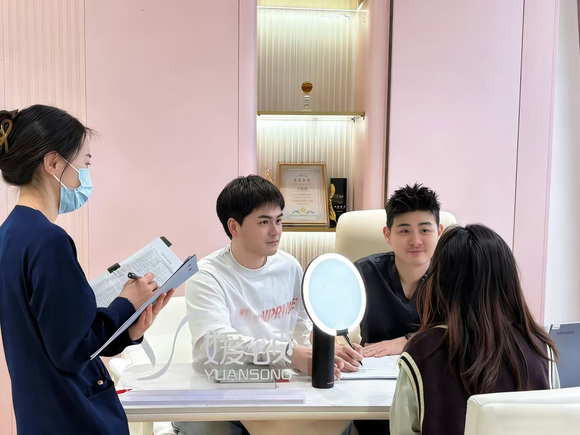
At Yuansong's second Shanghai clinic, aesthetic consultant LI Jiaheng said foreign clients had been visiting since it opened.
In autumn 2024, a 28-year-old South Korean man sought facial bone-contouring surgery to resemble a Korean celebrity. The clinic instead recommended injectable fillers, citing the risks of surgery and suggesting that carefully placed injections could improve his facial proportions.
The client was initially skeptical, Li told Jiemian News. But after returning for acne and acne-scar treatments, he developed greater confidence in the clinic and eventually agreed to the fillers. Li said the client was satisfied with the results and has since become a regular customer.
Other clients have included Japanese restaurant operators and visitors from the Middle East seeking treatments for forehead wrinkles.
For these patients, confidence in medical professionals is often a deciding factor.
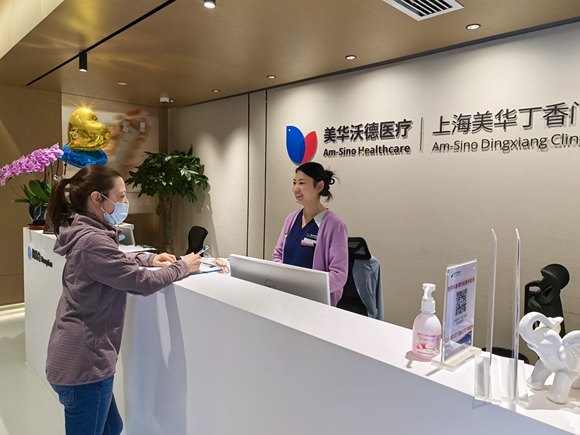
Dr. Jane Lee, chief medical officer and a general practitioner at Shanghai Am-Sino Dingxiang Clinic, part of Am-Sino Healthcare, said foreign clients tended to prioritize licensed medical facilities, professional standards and treatment safety over cheaper services at beauty salons.
LOU Xiaoli, the plastic surgeon who treated Amir at Jiahui, similarly emphasized institutional credibility. She said the hospital's multilingual staff and internationally trained doctors helped address differences in patients' expectations.
Lee said her clinic offered multilingual support and personalized treatments using approved equipment and products within the scope of its medical licenses.
Despite the interest, Shanghai's cosmetic medical services have yet to develop a substantial international visitor market.
HUANG Gaomin, founder of Shanghai Wantian, an aesthetic medicine management consultancy, said overseas Chinese returning home during holidays were among the foreign-based customers she encountered most frequently.
At Jiahui, foreign patients seeking cosmetic procedures are primarily teachers and businesspeople who have lived in China for extended periods, according to Lou. Referrals from other hospital departments, including orthopedics, rehabilitation and obstetrics and gynecology, also contribute to demand.
Botulinum toxin injections are the most common aesthetic treatment among the hospital's foreign patients, while both surgical and nonsurgical cosmetic procedures account for a small share of its overall business.
Patients who travel to Shanghai specifically for treatment are more likely to seek surgery, Lou said.
Customer loyalty also presents a challenge for expansion. Both Lou and Lee said patients tended to stay with doctors they already trusted, making it harder for unfamiliar clinics to attract newcomers.
Jiemian News found foreign models living in Shanghai sharing cosmetic treatment experiences on social media, although these posts largely involved routine skin maintenance rather than major procedures.
Industry operators see opportunities to expand beyond the city's existing foreign population, but acknowledge that international recognition remains a hurdle.
MA Weiwei, chief executive of Yuansong Group, said China's aesthetic medicine industry had developed considerably over nearly two decades, with Shanghai among its more internationally oriented markets.
Lou said foreign patients were often cautious when making medical decisions, but those who experienced treatment in Shanghai could become more confident in local providers.
Huang suggested that Shanghai could build an international reputation around specific procedures rather than trying to compete across the entire cosmetic medicine market.
She pointed to Turkey, which has attracted European patients seeking hair transplants through a combination of competitive prices, geographic proximity and specialized services. Shanghai, she suggested, could initially focus on East Asian customers, whose aesthetic preferences may be relatively similar.
Some specialized demand is already emerging.
Lou said Jiahui's cosmetic surgery business had remained broadly stable in recent years, but the hospital now receives roughly a dozen or more foreign patients annually for procedures addressing excess skin following significant weight loss, including tummy tucks and arm and leg contouring.
She linked the demand partly to the growing use of GLP-1 weight-loss medications.
For now, however, such cases remain a niche. Shanghai's cosmetic medicine market for foreign patients is still driven largely by people who already live in the city or have established relationships with its doctors.