After years of rapid expansion, weaker product momentum and falling comparable sales are testing the premium activewear brand in one of its most important markets.

Photo from Jiemian News
by QIN Lixin, ZHANG Rui
Lululemon's decade-long growth run in China has hit its first major setback as weaker demand for new products begins to weigh on a market that had become one of the company's biggest growth engines.
Mainland China net revenue rose 4% year on year in the second quarter of fiscal 2026 but fell 2% at constant currency, while comparable sales dropped 8% at constant currency.
"Q2 revenue came in below our expectations, with the shortfall driven predominantly by China Mainland, where revenue grew 4%," interim co-chief executive and chief financial officer Meghan Frank said on the company's earnings call.
The result marked a sharp reversal from the company's expectations just three months earlier, when it forecast mid-to-high-teens sales growth in mainland China for the quarter and maintained a full-year growth target of about 20%.
It also exposed a widening gap between lululemon's continued store expansion and the performance of its existing business. New and expanded stores and other channels in mainland China added US$23 million in revenue during the quarter, but falling comparable sales offset part of that contribution.
Analysts have questioned whether the company should slow new store openings in China and the US until sales stabilize. Frank said lululemon was taking a "very prudent" approach to expansion and would reassess store plans against current operating trends.
The slowdown comes after years of rapid growth.
Lululemon opened its first three mainland stores in 2016 after spending several years building local communities through yoga and other fitness activities. The strategy coincided with a broader rise in fitness and athleisure in China and helped the brand expand beyond a relatively niche yoga audience.
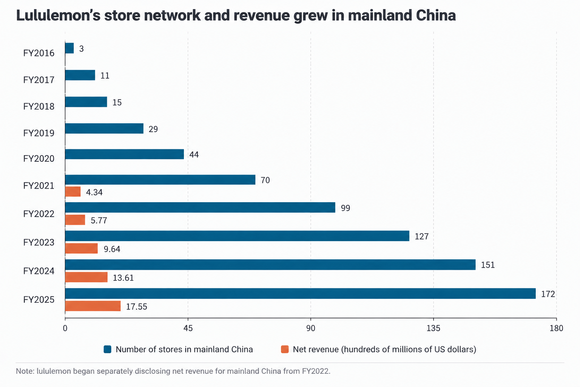
Its mainland store network grew from 99 locations at the end of fiscal 2022 to 172 in fiscal 2025. Revenue rose even faster, from US$577 million in fiscal 2022 to US$1.76 billion last year, when mainland China accounted for about 16% of group revenue.
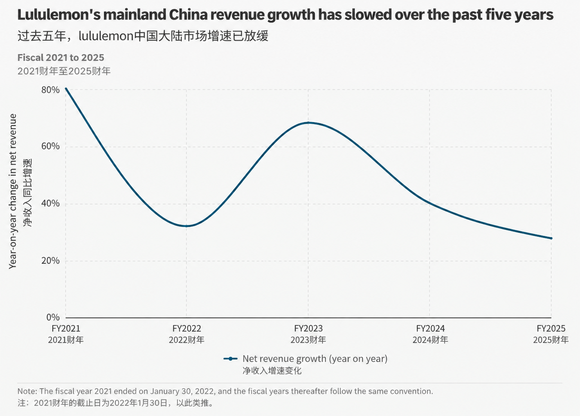
From fiscal 2021 to 2025, annual mainland China revenue growth ranged from 29% to more than 80%.
That growth was supported not only by store openings but by customers buying more from the brand as it expanded from yoga into running, training, tennis, outdoor apparel, menswear and footwear.
The latest figures suggest the second part of that formula is becoming harder to sustain.
Lululemon has been trying to broaden its assortment and increase the share of new products, but its recent launches have produced uneven results.
Management acknowledged on its latest earnings call that while some new products had received positive feedback, performance after launch had been inconsistent. Sales of its core yoga leggings category fell about 20% in the second quarter.
Interviews by Jiemian News also pointed to weaker enthusiasm for some new releases.
Consumers and a former lululemon store employee in Shanghai said many launches remained variations of established products, with changes to colors, fits, fabrics or other details rather than entirely new designs. Some newer categories have also received mixed feedback.
That matters for a brand whose premium pricing has long rested partly on distinctive fabrics, fit and product experience.
Similar concerns have emerged in lululemon's overseas markets. Former chief executive Calvin McDonald acknowledged that the company had not kept pace with trends in casual and social apparel, while demand for core products such as its Scuba sweatshirts had weakened.
Competition is also growing.
US activewear brand Alo has expanded its visibility in China through Tmall, WeChat, Xiaohongshu and offline activities in Shanghai. Its fashion-led positioning, helped by celebrity exposure and social-media marketing, gives consumers another premium option beyond more traditional sportswear brands.
Chinese brands are expanding as well. MAIA ACTIVE told Jiemian News that it continues to focus on first-tier and emerging first-tier cities while moving into selected second-tier markets. Since July, it has opened stores in Shenyang, Harbin and Changchun.
Lululemon's move into running, outdoor and other sports categories also puts it in more direct competition with specialist brands.
One sports consumer interviewed by Jiemian News questioned whether some of lululemon's newer products offered enough additional technical value to justify their premium pricing compared with competing brands.
That issue has become more relevant as Chinese consumers remain cautious about discretionary spending and increasingly weigh price against product differences.
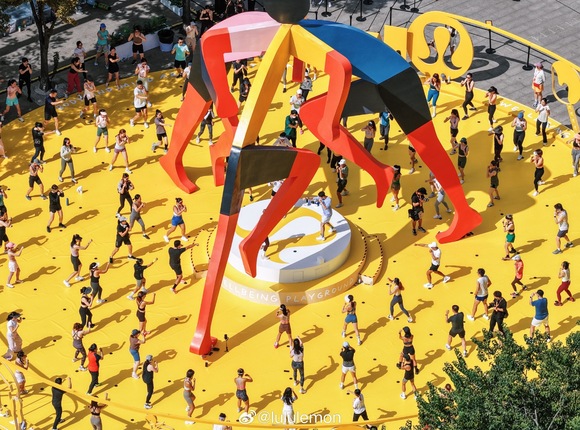
Lululemon has long relied on community-building alongside retail expansion in China.
Its yoga, running and fitness events have helped build customer loyalty and distinguish the brand from more conventional sportswear retailers. Large-scale events in Shanghai and other cities have attracted thousands of participants, while the company has continued to take the same model into new markets.
But its growing visibility has also brought risks.
A Great Wall event in May involving more than 2,000 participants drew criticism over a drum performance that some online users identified as Japanese taiko. Lululemon later apologized and said its planning and review process needed improvement.
Management said negative media coverage and social commentary in China had increased around the end of the first quarter and beginning of the second, affecting both stores and digital channels.
At store level, sales pressure has also become more apparent. A former Shanghai employee told Jiemian News that her former store introduced additional incentives in July and August tied to transaction values and individual sales volumes.
The company is nevertheless continuing to expand beyond China’s biggest cities.
That strategy offers room for growth, but it also raises questions about how much recurring demand premium activewear can generate in smaller markets, particularly if sales at existing stores remain weak.
The challenge now falls to Heidi O'Neill, who took over as chief executive on September 8 after more than 25 years at Nike.
Lululemon has said she will be tasked with accelerating product innovation, strengthening the brand's cultural relevance and supporting global growth.
China remains one of lululemon's most important markets, and its store network continues to expand. But after years in which new stores and rising demand reinforced each other, the latest quarter showed those two growth drivers beginning to diverge.
Reviving comparable sales will depend increasingly on whether the brand can produce new products that give existing customers a reason to buy again.