A Russian republic of about 4 million people, far from the China-Russia border, is using special economic zones, logistics links and a proactive investment-promotion system to put itself more firmly on the radar of Chinese companies.

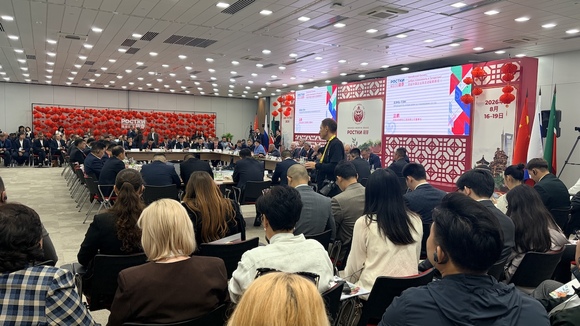
The fourth Sprouts Forum at the Kazan Expo International Exhibition Centre. Photo: Jiemian News
by LEI Jingshu
At the fourth "Sprouts: Russia and China — Mutually Beneficial Cooperation" International Forum in Kazan, more than 70 sessions covered trade, logistics, industry, agriculture, healthcare, law and talent. Artificial intelligence, the low-altitude economy and robotics were also on the agenda. Yet OpenAI, Nvidia, Tesla and Amazon were barely mentioned. At this China-Russia business forum, they were simply not the default reference points.
The event drew about 200 Chinese companies. Rather than benchmarking themselves against global or Chinese giants, many came with a straightforward pitch: what they could offer, and what kind of partner they were looking for.
A representative of China Railway Construction Corporation pointed to the company's work on Moscow's Big Circle metro line and the Moscow-Kazan motorway before outlining other infrastructure projects it could take part in. Qisheng (Liaoning) Industrial Group presented off-grid wind power and ultra-wide-temperature-range energy storage solutions designed for extreme cold. Mutouyun, a Dongguan-based digital services provider for the timber supply chain, said it wanted to expand in Russia. A member of the Guangzhou Animation & Game Industry Association was looking for partners in content imports and exports, joint production and staffing.
Alexander Babakov, deputy chairman of Russia's State Duma, told the media: "Looking at how the forum has developed over the years, it is clear that both the forms and substance of cooperation are becoming richer and deeper. This platform gives people an opportunity to meet face to face and find like-minded partners in business and science."
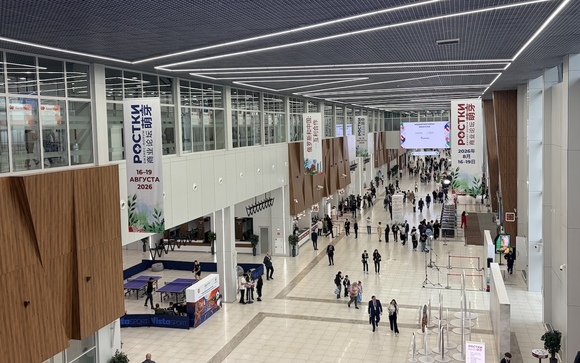
Kazan offers a different vantage point from which to look at Russia's business ties with China.
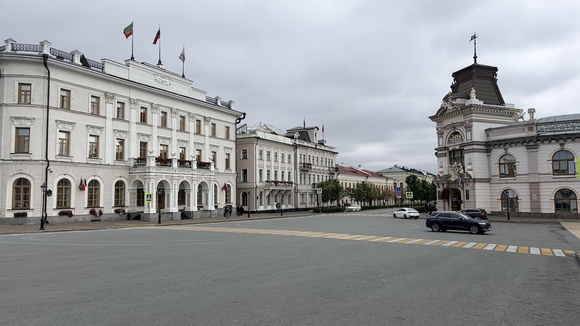
Located on the eastern edge of the East European Plain and within the Volga transport system, the city has long been associated with Russia's Eurasian identity. As the capital of Tatarstan, Kazan is also trying to turn that role as a connector into a commercial advantage.
Trade between Tatarstan and China reached about US$3.35 billion in 2025, more than 12 times the level a decade earlier. The figure was repeatedly cited at the forum. Yet against annual China-Russia trade of more than US$200 billion, it says relatively little about Tatarstan's weight in the Russian economy or the role it hopes to play in bilateral economic ties.
Tatarstan does not share a border with China, nor does it have Moscow's headquarters economy or vast consumer market. Its advantage lies in a relatively broad industrial base spanning petrochemicals, machinery and aviation. The Alabuga and Innopolis special economic zones have built on that base, focusing respectively on advanced manufacturing and technology.
Tatarstan has also ranked among the top two regions in the Agency for Strategic Initiatives' national investment climate ranking since 2019, tying with Moscow for first place in 2026. Its focus on attracting investment is visible not only in incentives and industrial parks, but also in infrastructure access, project services and government-business coordination.
Tatarstan has increasingly sought a larger role in China-Russia industrial cooperation. Taliya Minullina, who has headed the Tatarstan Investment Development Agency since 2014, is a visible part of that effort.
During the "Chinese entrepreneurs, welcome to Tatarstan!" dialogue and a later press briefing, Minullina readily discussed the economic profiles of different Chinese provinces and cities. Many Russian businesses, she said, could not distinguish Jiangsu from Jiangxi, Shanxi from Shaanxi, or Hebei from Hubei. "But we know how different they are."
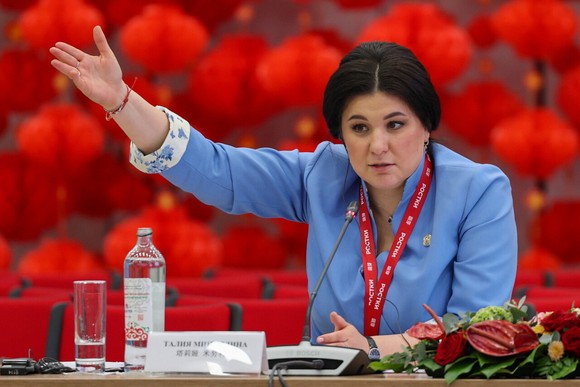
Minullina told Jiemian News that the agency also follows China's external economic relations closely. She mentioned President Xi Jinping's Global Governance Initiative and the World AI Cooperation Organization headquartered in Shanghai. The agency also studies China's 15th Five-Year Plan to understand its priorities for the coming years.
"As a global economy, China is developing faster than many other countries, which we are very pleased to see," she said. "We also hope to take part in this process and ride the 'east wind'."
Rustam Minnikhanov, Rais of the Republic of Tatarstan, has also been personally involved in attracting Chinese investment. He has visited two Chinese regions so far in 2026 and plans trips to Shenzhen and Shandong later this year. The Kazan China Investment Support Centre, established last year, is drawing up a five-year China promotion plan. This year's forum included a dedicated Volga Federal District-Greater Bay Area matchmaking session, while organisers plan to invite businesses and local-government representatives from northeast China next year.
"Gateway" and "hub" have long featured in Tatarstan' investment pitch. Increasingly, that pitch is aimed at Chinese companies.
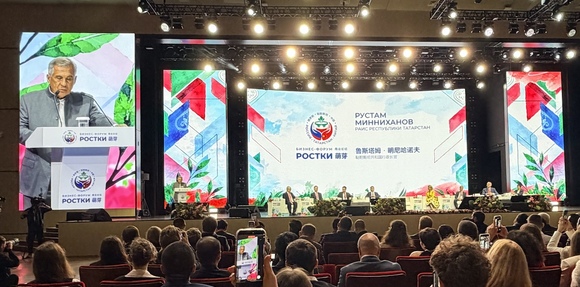
Trade remains the largest and most mature part of China-Russia economic cooperation, but local production was repeatedly raised at this year's forum.
Russian participants said they wanted more products manufactured domestically and more local supply chains to take shape. At a session on industrial clusters, medical equipment, machine tools and automotive components were among the sectors singled out for greater localisation.
Haier provides an established example. Since opening a refrigerator plant in Naberezhnye Chelny in 2016, the Chinese appliance maker has expanded local production into washing machines, televisions and water heaters. At this year's forum, Russian speakers again cited the appliance industrial park as a localisation case, noting that local suppliers are already providing steel components for refrigerators and washing machines.
Russia wants more Chinese companies to participate in local manufacturing and supply chains, while Chinese businesses are also testing new markets and forms of cooperation. The head of CUS GROUP said the company hoped eventually to build a factory in Tatarstan. A Shenzhen company specialising in the green recycling of used lithium batteries presented low-temperature sodium-ion cell technology and proposed cooperation including technology transfer and joint factory construction. Sany Group's Russia chief, meanwhile, stressed the importance of joint design, research and development, and local manufacturing.
Across several sessions, both Chinese and Russian participants expressed interest in extending cooperation from trade into investment, joint R&D and local production. Whether that translates into factories will depend on market demand, logistics, local partners and viable routes into the market.
Pavel Kuznetsov, vice-president of Russia's National Coordination Centre for International Business Cooperation, cautioned against expecting complete localisation from the outset. "You should not demand full localisation from Chinese companies at the very beginning," he said, adding that partnerships and projects need to develop gradually.
Healthcare was one of the most visible sectors at the forum.
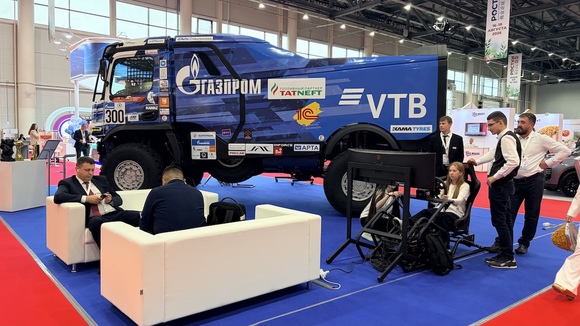
For the first time, the Sprouts Forum held a two-day Russia-China healthcare technology research and business seminar, covering cardiac surgery, vascular intervention, surgery, anaesthesiology and intensive care. Medical equipment was also one of the few sectors with a sizeable presence in the exhibition hall.
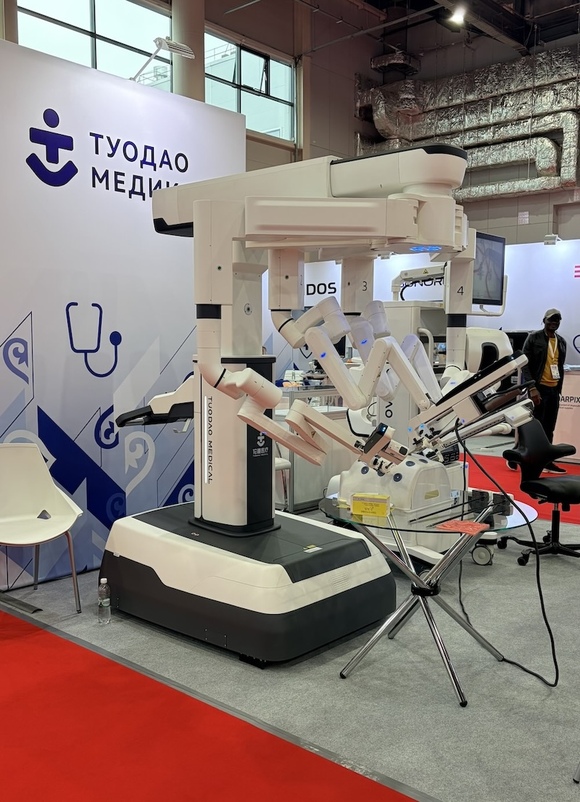
One of the products drawing the most attention was an endoscopic surgical robot presented by a Nanjing-based medical technology company. A company representative said it hoped to keep the demonstration unit in Russia for further displays, research cooperation and animal experiments, while exploring work with Russian institutions on remote surgery and robotic assistance in complex procedures such as liver transplants.
In recent years, the logistics, payment, maintenance, software and parts networks supporting Russia‘s imported medical equipment have become more complicated. For a market that has long relied heavily on imported equipment, reliable supply and local service have become more important.
Vladimir Popov, head of the Traditional Chinese Medicine department at the Institute of Oriental Medicine at RUDN University, said Russian medical professionals were interested in closer exchanges with China in areas including minimally invasive surgery, medical robotics and biopharmaceuticals.
Such cooperation quickly extends from equipment to people.
Timirkhan Alishev, vice-rector of Kazan Federal University, told Jiemian News that the university was "very market-oriented". As one of Russia's oldest universities, it has its own pharmaceutical and chemical production facilities, supplies some chemical inputs to drugmakers and works with petrochemical companies on catalyst development. It also works with Chinese manufacturers on laboratories and workforce training.
"Students are already involved in company work while they are still studying," Alishev said. Some students learning Chinese and familiar with Chinese culture help Russian companies communicate with Chinese partners at events such as the Sprouts Forum. After graduation, some go on to work for Chinese companies in Russia or move to China.
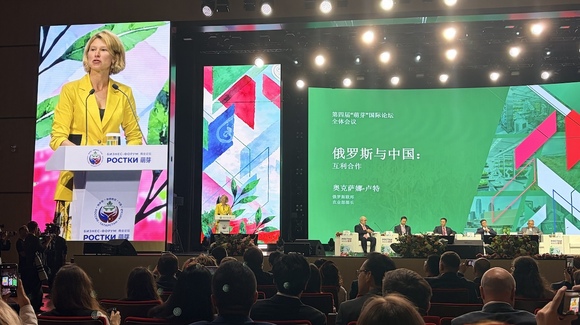
Trade remains the most established part of China-Russia economic ties, but local production, technology cooperation and talent development are receiving more attention.
From a first meeting to a company operating on the ground, and from a memorandum of intent to an established supply chain, Kazan is trying to give more China-Russia projects somewhere to take root.
What these "sprouts" eventually grow into will take time to determine.