The company's investment case hinges on its global footprint.

Photo: Amos official account
by MA Yue
Chinese confectionery maker Amos Food Group has filed for a Hong Kong initial public offering, seeking to convince investors that its overseas-driven growth and hit-product strategy can support a public-market valuation.
The move reflects a broader shift among Chinese consumer brands toward overseas markets as domestic growth slows and competition intensifies at home.
Founded in 2004 as Shenzhen-based Jinduoduo, Amos focuses on gummy and novelty confectionery, operating the Amos brand for creative products and Biobor for functional gummies. According to its prospectus citing Frost & Sullivan, the company ranked as China's largest confectionery player and the world’s fifth-largest gummy maker by retail sales in 2025.
Revenue rose from 1.07 billion yuan to 2.78 billion yuan (~US$400 million) between 2023 and 2025, while net profit increased from 137 million yuan to 600 million yuan. Despite ranking first in China, its global share stood at just 1.1%, underscoring how fragmented the industry remains.
The company's investment case hinges on its global footprint. More than 70% of revenue comes from overseas markets, with the share rising from 52.8% in 2023 to 77.1% in 2025, reducing reliance on China’s slower-growing domestic market. North America has become its largest market, contributing 52.7% of revenue in 2025.
Founder MA Enduo, who built the business through foreign trade, entered the U.S. market early, placing products in major retail chains such as Walmart. The company now sells in more than 80 countries and regions, including Europe, Australia and Southeast Asia, and has secured shelf space at mainstream retailers including Walmart, Target and Costco— a rare example of a Chinese confectionery brand breaking into core U.S. retail channels.
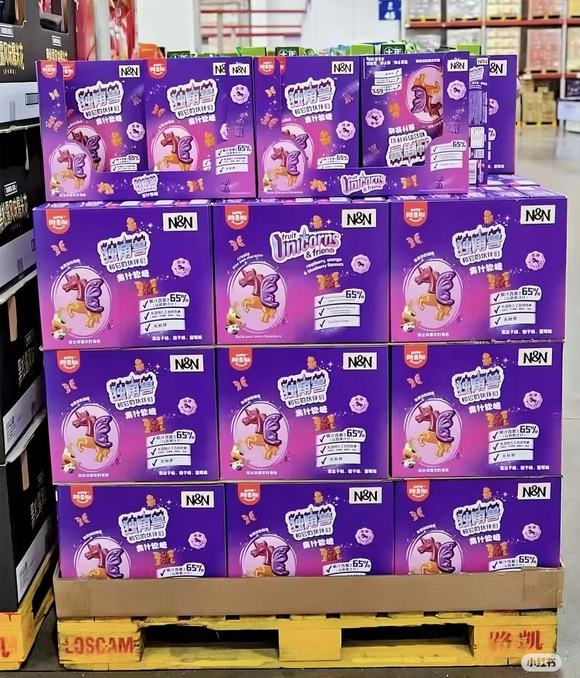
Growth has been driven by a steady pipeline of hit products. Its flagship Peelerz gummy, designed to mimic the tactile experience of peeling fruit, has become a top-selling item in membership retail channels. Other offerings, including 4D-shaped gummies, seasonal editions and novelty lollipops, emphasize interactive appeal and social-media shareability.
The company said it can bring new products to market within about three months, from concept validation to mass production, allowing it to respond quickly to changing consumer trends. This model relies on continuously generating viral products rather than building long-term brand pricing power.
Backer BA Capital told Jiemian News that Amos's competitiveness lies not just in exporting products but in building localized operations across markets, including product design, distribution and organizational structure. In the U.S., one of the most competitive confectionery markets, Amos is currently the only Chinese brand with visible presence across major retail shelves, the investor said.
Still, structural challenges remain. The confectionery sector is characterized by low barriers to entry, high product similarity and limited pricing power, with success often dependent on distribution strength and shelf exposure. Many of Amos's signature products — including peelable gummies and 3D shapes — lack strong patent protection, making them vulnerable to imitation.
Its second brand, Biobor, focuses on probiotic gummies, a category already crowded with competing offerings, raising further questions about differentiation.
For companies like Amos, Hong Kong offers access to global investors, but the bar has risen. Heightened competition and macro uncertainty are making investors more cautious, especially in sectors with limited barriers to entry.
For investors, the question is whether Amos can turn a string of viral hits into durable growth — or whether intensifying competition will erode margins before it can build a lasting edge.