"Chinese companies are shifting from 'importing technology' to 'exporting capabilities' – especially in sectors like e-commerce, consumer brands, and life sciences, where they have developed scalable models that can be extended globally."

by SUN Yizhen
As China deepens its high-level opening-up, cross-border investment and global business collaboration are entering a new phase. For leading international law firms, this shift has created expanding opportunities.
In a recent interview with Jiemian News, Chuan Sun, Managing Partner of the Shanghai and Hong Kong offices of Morrison Foerster, reflected on the firm's experience in China and shared his views on opportunities in the country's M&A market, sector trends, cross-border compliance risks, and the evolution of legal services.
Founded in San Francisco in 1883, Morrison Foerster entered Asia in the 1980s and began expanding into the Chinese mainland in the 1990s.
Sun, a veteran lawyer specializing in cross-border M&A, technology transactions, and international investment, said Chinese companies are moving away from expansion driven by scale and speed toward a more strategic and disciplined approach. The focus, he noted, has shifted from "what to buy" to "how to create value after the acquisition." Increasingly, overseas deals hinge on strategic fit, as Chinese firms transition from "importing technology" to "exporting capabilities."
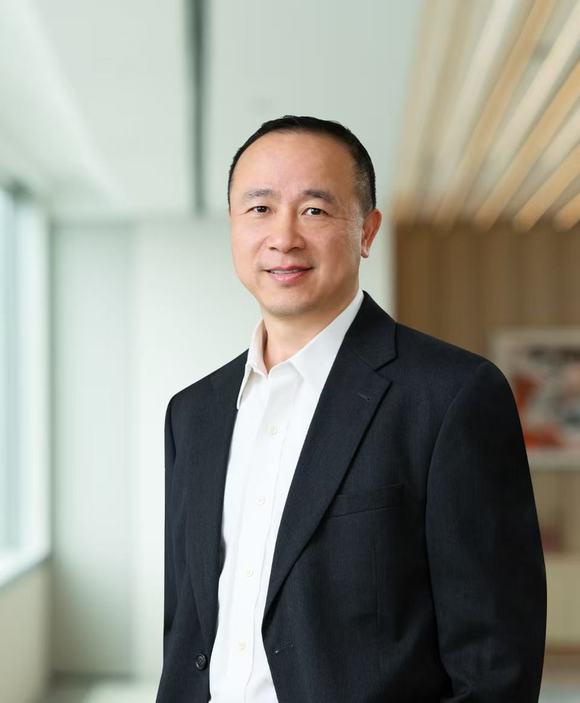
Jiemian News: When did Morrison Foerster enter China, and how has it developed since? What were some key milestones?
Sun: Morrison Foerster opened its first Asian office in Hong Kong in 1983 and later expanded into the Chinese mainland, entering Shanghai in 2003. Since then, we've built a broad practice covering investment, financing, M&A, private equity, funds, arbitration, and regulatory matters.
Our clients span sectors including technology, life sciences, data centers, finance, artificial intelligence, fintech, digital media, food and agriculture, and semiconductors.
One notable milestone was in 2008, when we served as the only international law firm providing comprehensive international legal services to the Beijing Olympic Organizing Committee.
Jiemian News: As China continues to open its financial sector, what opportunities has this created for Morrison Foerster?
Sun: The continued opening of China's financial markets has brought more sectors within reach of foreign participation, creating opportunities for cross-border M&A and strategic investment.
We've seen sustained demand across private equity, investment funds, advanced manufacturing, technology, and consumer sectors. Cross-border transactions have become an important channel linking international capital with high-quality Chinese assets.
This has expanded our work in areas such as M&A, investment funds, fintech, technology transactions, and compliance investigations. At the same time, China's increasingly market-oriented and rules-based business environment allows us to better align international standards with local practice.
We assist clients in structuring transactions, navigating regulatory communication, and managing cross-border risks – particularly in areas like data compliance and anti-corruption – so they can operate effectively in a more open market.
Jiemian News: What are the key factors in attracting more foreign institutions and long-term capital to China?
Sun: China has made tangible progress in attracting foreign investment. Policy transparency and predictability have improved, and regulatory frameworks in areas such as intellectual property, data privacy, and data security are increasingly aligned with international standards. These developments have strengthened investor confidence.
Looking ahead, the key lies in improving consistency and stability in policy implementation, as well as establishing more efficient, ongoing communication between regulators and businesses.
For foreign investors, understanding how policies are applied in practice is often more important than the policies themselves. Long-term capital is particularly focused on predictability, transparency, and operational clarity. Improving these "soft" aspects of the business environment will help reduce uncertainty in cross-border investment.
We also encourage foreign companies to strengthen their own governance and compliance systems and maintain proactive engagement with regulators.
Jiemian News: Which sectors do you see as most promising in China's current M&A market, and what challenges remain?
Sun: We were deeply involved in the Burger King China transaction, advising CPE on its strategic partnership with Restaurant Brands International and the establishment of a joint venture to operate the business in China. The deal was complex in both structure and execution and laid the groundwork for the brand's long-term development in the market.
More broadly, China's M&A market remains vibrant, supported by industrial upgrading and policy support. At the same time, transactions are becoming more complex and increasingly cross-border in nature.
We continue to see opportunities in consumer, life sciences, as well as technology. The consumer sector benefits from structural upgrading and brand consolidation, while life sciences remain active for innovation and capital inflows. Globally, healthcare M&A has reached roughly US$490 billion and is expected to remain a major growth area.
Challenges persist. Regulatory requirements – such as antitrust review, national security screening, and data compliance – are becoming more demanding. Meanwhile, macroeconomic conditions and geopolitical factors are adding uncertainty to cross-border deals. Competition is also intensifying, with clients placing greater emphasis on commercial insight and execution efficiency.
Jiemian News: In outbound investment, how can Chinese companies balance commercial objectives with compliance requirements?
Sun: Chinese outbound investment is becoming more strategic and disciplined. Companies are no longer focused solely on scale or speed but on long-term value creation.
Firms are paying closer attention to whether they can leverage their operational capabilities, supply chain strengths, and cost advantages developed in China to create value in overseas assets. The logic of investment is evolving – integrating overseas technology, brands, and markets with domestic capabilities, or restructuring underperforming assets.
At the same time, regulatory considerations have become central. Investment screening and national security review regimes in major markets like the United States, Europe, and Japan are tightening. Regulatory risk must now be assessed at the outset, not as an afterthought.
In some jurisdictions, even limited connections to Chinese capital can trigger scrutiny. Compliance is no longer a technical issue at the end of a deal – it can determine whether a transaction proceeds at all.
In response, companies are adapting their strategies. Many are building localized operations overseas, aligning with global supply chains, and enhancing resilience. In sensitive markets, setting up offshore platforms, improving governance transparency, and incorporating local teams can help secure market access.
Ultimately, successful cross-border M&A depends on strategic alignment. Chinese companies are shifting from "importing technology" to "exporting capabilities" – especially in sectors like e-commerce, consumer brands, and life sciences, where they have developed scalable models that can be extended globally.
Jiemian News: How do you assess Shanghai's development as an international financial center?
Sun: We remain broadly optimistic about Shanghai's trajectory as an international financial center.
Its key strength lies in the scale and completeness of its financial markets. Equity, bond, and foreign exchange markets rank among the world's largest, forming a multi-layered system with strong resource allocation and price discovery capabilities.
Shanghai also offers a comprehensive financial services ecosystem spanning banking, securities, insurance, and asset management, which supports the real economy –particularly in technology and advanced manufacturing.
In addition, the city benefits from consistent national-level policy support and institutional innovation, including free trade zone initiatives, financial opening programs, and the internationalization of the renminbi. These provide a stable framework for reform and opening.
Shanghai's forward-looking focus on financial technology, green finance, and services for the real economy, combined with its strong policy execution, continues to create opportunities for international firms like ours.