Since 2020, expansion has increasingly been driven by supply chain shifts.

by HE Liuying
Chinese small and medium-sized enterprises are pivoting toward emerging markets as shifting trade patterns push them to look beyond Western demand, said John Wong, who oversees Mid-Cap and SME banking at DBS Bank's China unit.
China's goods trade exceeded 11 trillion yuan in the first quarter, with much of the growth coming from Belt and Road partner countries and markets such as Africa.
The shift points to a broader change in how Chinese companies expand overseas — from cost-driven relocation to supply chain-led clustering in newer markets.
"Chinese SMEs now have strong momentum to go global," Wong told Jiemian News, "Beyond Europe and the United States, markets across Asia, Africa and Latin America have become key drivers for growth. We are paying close attention to markets such as Ethiopia."
The bank has been active in southern China's SME sector since the early 2000s.
Below are edited excerpts of the interview.
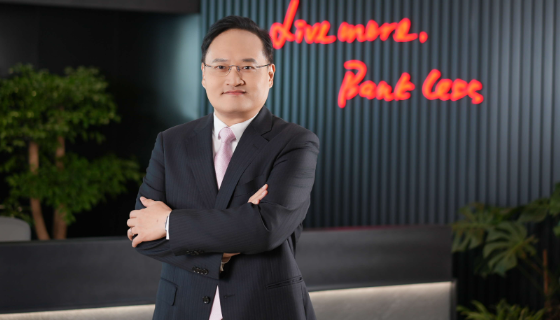
Jiemian News: What new trends are emerging in Chinese SMEs' overseas expansion?
Wong: Chinese companies' overseas expansion has evolved in phases.
The first wave followed China's entry into the World Trade Organization, dominated by large state-owned enterprises, with SMEs mainly expanding abroad to reduce costs.
A second phase between 2017 and 2019 saw companies move into markets such as Vietnam and Mexico.
Since 2020, expansion has increasingly been driven by supply chain shifts. In overseas industrial parks — for example, printed circuit board (PCB) clusters in Indonesia — Chinese firms are present across upstream, midstream and downstream links. This is not deliberate clustering, but reflects advantages in efficiency and quality, making Chinese firms a natural choice for partners.
Jiemian News: How have overseas markets shifted? Do Europe and the United States still dominate?
Wong: Europe and the United States remain important, particularly in terms of order size. Beyond them, markets across Asia, Africa and Latin America have become key drivers for growth. We are paying close attention to markets such as Ethiopia.
Jiemian News: What should companies focus on when entering these markets?
Wong: Localization is critical — from product design to operations.
For example, mobile phones sold in India often require greater durability and multi-SIM functionality. On the operational side, companies must navigate foreign exchange controls and local regulations. Some firms also shift part of their production overseas to balance receivables and payables in local currencies.
Jiemian News: What is driving SMEs to expand overseas, and what has changed recently?
Wong: Demand for overseas expansion changes with the broader environment. With policy support in the mid-2010s, cross-border e-commerce grew rapidly. We started working with SME clients around 2019, and the client base has since expanded.
During the pandemic, traditional trade was disrupted, while cross-border e-commerce — especially in Shenzhen — grew quickly. In 2025, as tariff tensions between China and the United States intensified, many firms that had hesitated earlier began setting up operations in Thailand and Vietnam.
Chinese SMEs now have strong momentum to expand overseas, creating opportunities for banks that serve them.
Jiemian News: What risks do SMEs face when going global?
Wong: Every step carries risks — from market selection to local regulations, economic volatility and labor challenges.
That is also reshaping the role of banks. We are moving beyond traditional lending to provide broader financial advisory services for our clients' overseas expansion.
Jiemian News: SMEs typically have lower risk tolerance. What are their key financial needs?
Wong: Cross-border e-commerce firms, for example, have seasonal financing needs, typically around Thanksgiving and Christmas.
They also require high-frequency transactions and stronger digital capabilities. We use SaaS systems and AI tools to support this.
Multi-currency management is another challenge. Converting smaller currencies can be costly and slow. DBS can support more than 100 currencies globally.
For example, we designed a hedging solution for a Shenzhen-based e-commerce company covering 80% of its Indonesian rupiah exposure. Direct currency exchange helped improve its operating efficiency in Southeast Asia.
We also encourage firms to set up regional treasury centers in Singapore to better manage exchange rate risks and capital allocation.
Jiemian News: How are AI tools helping you serve SMEs?
Wong: AI adoption has been faster than expected. It is mainly used in support functions such as customer hotlines and credit reports.
In risk management, AI enables timely warnings, including monitoring litigation risks. Data security remains critical, and we approach this aspect prudently.
Jiemian News: What are your competitive advantages?
Wong: Compared with domestic banks, foreign banks may lack advantages in capital and branch networks, but we have strengths in products, services and teams.
We provide full-lifecycle services and have Chinese-speaking relationship managers in markets such as India, Vietnam and Indonesia.
We also build long-term client relationships. For example, we have supported a home appliance exporter since 2008, helping it grow into a multinational through trade finance, cash management and hedging, and assisting its overseas subsidiaries and IPO.
Jiemian News: What challenges do financial institutions face?
Wong: The biggest challenge is bad debt risk. We focus on sector selection, supporting companies in high-growth industries even if they are not market leaders.
Jiemian News: What are DBS' next steps?
Wong: We focus on depth, not breadth. We aim to build scale in sectors including TMT, consumer goods, healthcare, and new energy and materials, while supporting higher-quality growth.