Chinese automakers still need to build out distribution, after-sales service and brand strength to sustain growth overseas.

The 2026 Beijing Auto Show, April 24. Photo by Wang Zhen
by WANG Zhen
The Beijing Auto Show is taking on a new role. Beyond serving as a launchpad for domestic automakers to unveil models and compete for local attention, it is increasingly becoming a venue where overseas dealers assess brands, evaluate products and scout business opportunities.
On the opening day, April 24, Farakh Makhmudov, chairman of Kazakhstan's Orbis Group, moved from booth to booth, meeting automakers and sizing up new models. In recent years, he has traveled to China several times annually to explore partnerships. Today, Chinese brands account for about 40% of the portfolio operated by Orbis, including Zeekr and Exeed.
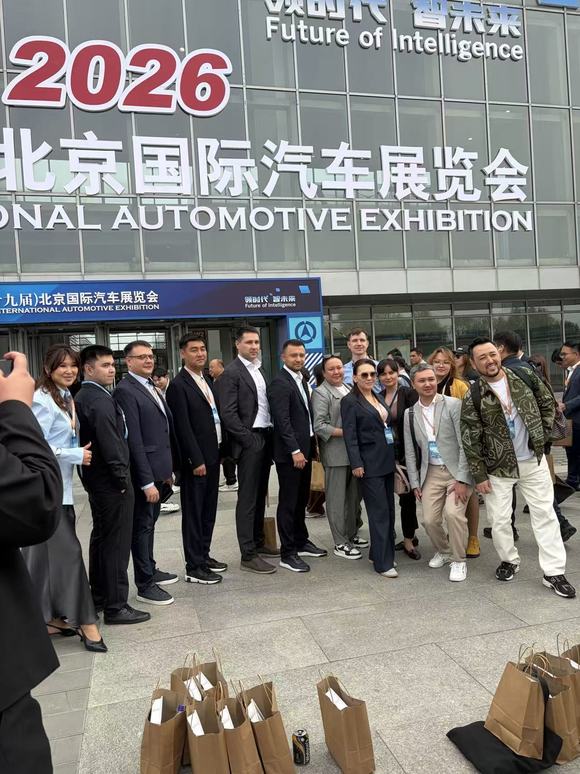
Dealers like Makhmudov were already present at the previous edition of the show, but their numbers have grown noticeably this year, with a broader geographic mix. Groups of overseas buyers could be seen moving across exhibition halls, speaking English, Russian, French, Spanish and Italian, frequently stopping to photograph vehicles and examine new technologies.
Several dealers told Jiemian News they were unlikely to close deals on the spot. Instead, they use the show to evaluate product pipelines, brand positioning and launch cadence before deciding whether to advance negotiations.
Some Chinese automakers are proactively bringing overseas partners to the event. On the first day, Chery Holding Group invited more than 1,000 dealers from over 100 countries and regions to its Jetour booth, before hosting them at its headquarters in Wuhu for a global dealer conference.
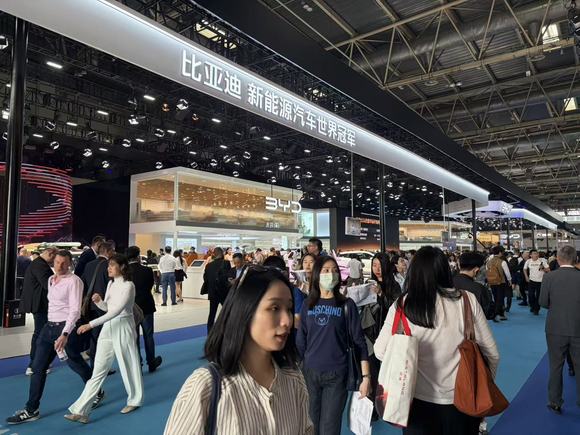
This shift is giving the Beijing Auto Show a function similar to a trade fair. It remains a stage for product launches, but is increasingly used to connect with global distribution channels, test overseas demand and facilitate partnerships.
Behind the influx of foreign dealers lies a broader shift in how Chinese cars are perceived overseas. While competitive pricing remains a key advantage, Chinese vehicles are no longer viewed simply as low-cost options. For many distributors, they have become a core business capable of delivering both volume growth and margins.
Tamer El-Anani, vice chairman of Egypt's Arabiat, told Jiemian News that Chinese brands accounted for 39% of car sales in Egypt in 2025, up from 21% a year earlier, with the share still rising.
"Selling Chinese cars is profitable," he said. While Korean and European brands still dominate, Chinese manufacturers are steadily gaining ground. In his view, the market could eventually tilt heavily toward Chinese brands.
Similar trends are emerging in Kazakhstan, where consumers value Chinese vehicles for design and affordability. New energy models, particularly hybrids, are also gaining traction.
In Saudi Arabia, Ashraf Ruad Ali, business development manager at Altawkilat, said Chinese brands now account for more than 30% of the market. While internal combustion models still dominate, he is actively seeking new Chinese partners at the show. Altawkilat already distributes brands including Hongqi and Dongfeng.
These perspectives underscore a broader shift: Chinese brands are no longer just a price-driven alternative, but a growing business proposition. Faster product cycles, richer features and attractive margins are prompting dealers to reassess their strategies.
Yet acceptance varies across markets.
In emerging regions such as the Middle East, Africa and Central Asia, Chinese brands are expanding rapidly on the back of pricing, features and speed to market. In Europe, however, the challenges are more complex.
Nicolas Caillot, CEO of French distributor Car East, told Jiemian News that although perceptions of Chinese automakers have improved significantly, they are still largely seen as value brands rather than technology leaders. In contrast, local players such as Renault and Stellantis retain stronger engineering credibility in the eyes of consumers.
This creates a different test for Chinese automakers abroad. While Chinese consumers prioritize smart cockpits, advanced driver assistance and charging efficiency, European buyers focus more on cost of ownership, quality and long-term reliability. Simply exporting the domestic "tech narrative" is unlikely to work.
After-sales service has emerged as a critical factor. Caillot noted that some Chinese manufacturers still underinvest in service networks and spare parts. Without reliable maintenance support, he warned, the business risks becoming a one-off sale rather than a sustainable operation.
Supply chain issues are also evident in faster-growing emerging markets. El-Anani said vehicle shortages remain a challenge in Egypt due to shipping constraints, with delivery delays of up to two months. Long lead times for spare parts have already led to customer losses.
He argued that Chinese brands need to build larger local warehousing systems to stock vehicles and components in advance, reducing delivery and repair times.
For frontline dealers, the long-term viability of the business depends less on the vehicles unveiled at auto shows and more on what happens after the sale — service, parts availability and supply chain responsiveness.
Addressing these issues requires building localized sales and service systems. Some Chinese automakers are already adjusting their approach.
In Belgium, brands under Chery — Omoda and Jaecoo — are not relying solely on importers. Instead, they are establishing local entities and working directly with dealers to build integrated sales and service networks.
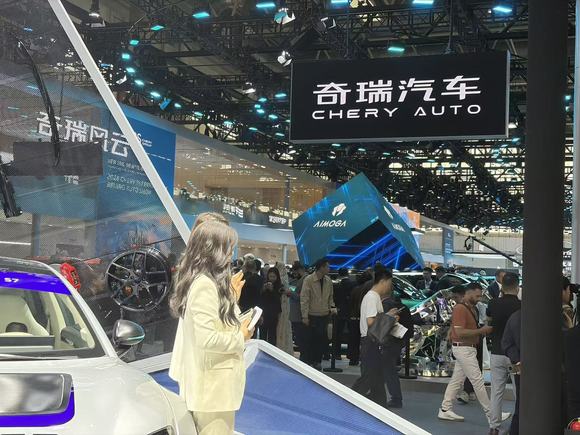
Gauthier Ellebaut, sales director for Omoda and Jaecoo in Belgium, said the strategy aims to lower barriers for consumers to engage with Chinese brands, including test drives and showroom access. He noted that many customers visiting the brand had previously owned vehicles from other manufacturers.
He added that as more Chinese brands enter Europe, clear brand positioning will become essential. Without differentiation, consumers may struggle to distinguish between new entrants, limiting repeat purchases.
Feedback from overseas dealers suggests that China's automotive expansion is entering a more complex phase. Price and features remain important, but are no longer sufficient on their own.
In emerging markets, Chinese brands continue to attract dealers with strong value propositions and growth potential. In mature markets such as France and Belgium, they face deeper challenges in branding, regulation, after-sales support and localization.
This marks a transition from exporting products to exporting systems. At the Beijing Auto Show, overseas dealers are not only identifying opportunities — they are also assessing risks. The key question is whether Chinese automakers can build robust channels, deliver reliable service and sustain the business over the long term.