Shanghai Fashion Week is becoming part of buyers’ global circuit — a place to scout, connect and start deals.

MODE Shanghai Fashion Trade Show
by ZHOU Fangying
Fresh off long-haul flights, buyers move between runway shows and showrooms at Shanghai Fashion Week, packing tight schedules as they scout a new wave of Chinese designers and fold Shanghai into their global circuit.
Caterina Ercolie, a senior buying consultant at Italian boutique ANTONIOLI, had little time to adjust after landing. Within hours, she was on a near-continuous schedule, going almost 40 hours without proper rest. By the next morning, she had moved from retail visits to order appointments, compressing her itinerary into a dense circuit.
For Ercolie, the six-day trip is less about attending shows than conducting what she describes as a high-intensity "scan" — seeing as many brands and designers as possible while forming a rapid view of the Chinese market.
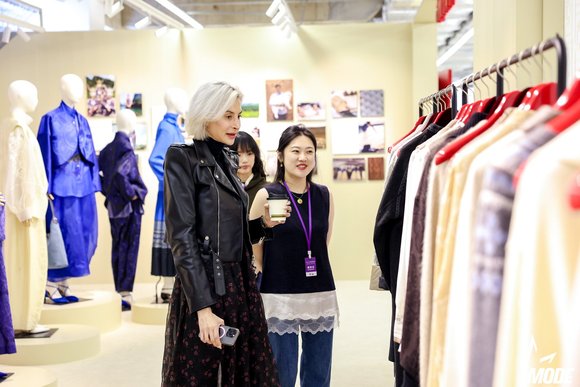
ANTONIOLI has worked with Chinese designers including Uma Wang and Ziggy Chen, but such collaborations remain limited and brand-specific. Chinese labels account for less than 5 per cent of its portfolio.
This is her first visit to Shanghai Fashion Week, which she is approaching as a test of whether the market is ready for deeper integration into its global buying system.
Marine Humeau, merchandise manager at Paris department store Printemps, is operating on a similarly tight schedule.
Within hours of arrival, she was moving between shows and showroom appointments, while also visiting selected neighbourhoods and cafés.
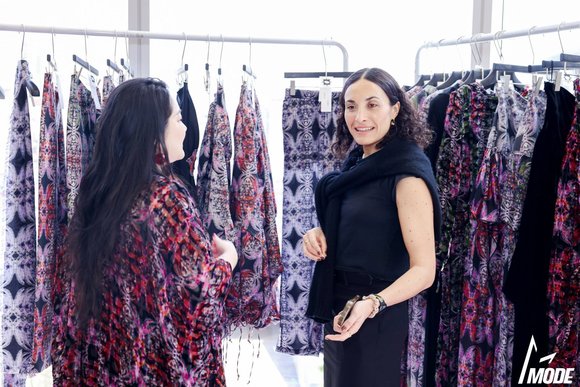
The intensity is deliberate. During the previous season, Humeau had already noticed signs — largely via social media — that Chinese designer brands were evolving: stronger product development, more mature retail networks in Shanghai, and a faster market pace. But those signals remained fragmented.
This time, she has linked shows, showrooms and retail visits into a single, tightly structured itinerary to verify those impressions within days — and to identify brands that stand apart from their European counterparts.
Her framework is clear: price first — with luxury typically above 5,000 yuan (US$690) and contemporary brands starting from around 2,000 yuan — followed by design language, including femininity, romanticism and modernity, and the ability to translate Chinese cultural elements into a globally legible aesthetic.
Several buyers said Chinese designer brands are gaining appeal for their cultural expression — but only when it can be translated into a design language that resonates globally.
Taiko Miyajima, a womenswear buyer at Japanese retailer BARNEY'S NEW YORK, arrived in Shanghai after two weeks at Paris Fashion Week. While she had encountered some Chinese designers abroad, she said the Shanghai experience felt more concentrated, with a higher density of strong brands and a more energetic atmosphere.
It is also her first visit. Traditionally focused on European and US labels, Japanese retailers are increasingly looking to Asian designers to differentiate their assortments.
For Miyajima, the appeal lies in contrast. Compared with established Western brands, some Shanghai-based designers offer more direct and distinctive expressions — at times playful or slightly exaggerated — adding new layers to Japan's prevailing "quiet luxury" aesthetic of restraint and minimalism.
She also noted the quality of fabrics after seeing products up close in showrooms.
Initially attending without concrete buying plans, Miyajima quickly changed course. After two hours in showrooms, she returned to several booths to discuss potential collaborations.
Her preferred approach is to test brands through pop-up stores, requiring not only products but also strong visual merchandising and spatial presentation. This allows quick feedback before committing to longer-term wholesale arrangements.
Other buyers echoed similar expectations. Ercolie said brands seeking entry into ANTONIOLI's system must align with its marketing approach, rather than simply supplying products.
As a boutique known for avant-garde curation, ANTONIOLI prioritises coherence across its brand mix. Selection depends not only on individual labels, but on how they fit within its overall aesthetic.
Budget and timing also shape decisions. Ercolie said this visit is mainly for screening and early-stage evaluation, while planning for spring/summer 2027 and working within an already largely allocated autumn/winter 2026 budget. Even when promising brands are identified, final decisions must fit within existing allocations. Once agreed, deals can be concluded within about 10 days.
At Printemps, similar constraints apply. Humeau noted that buyers typically spend six to seven weeks each season covering fashion weeks in New York, London, Milan and Paris, taking up most of their time and budget. Within that system, Shanghai is not always a priority.
Industry sources said geopolitical uncertainty and rising travel costs have also limited overseas attendance this season.
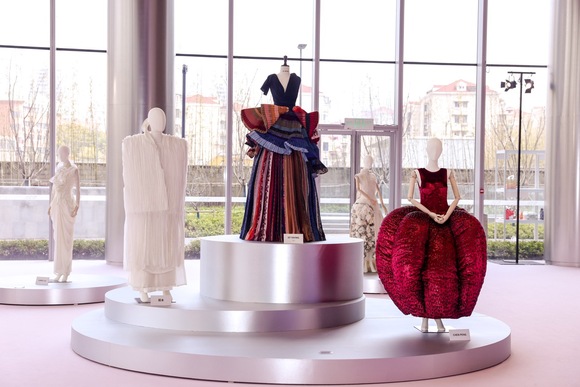
Roles across fashion weeks are becoming more clearly defined. Paris and Milan remain core for placing major orders with established brands, while others serve as platforms for discovering new labels.
Shanghai, however, offers a different structure, compressing runway presentations and order appointments into a single window, allowing faster movement from viewing to discussion and preliminary decisions.
Buyers said this, along with greater access to designers, provides deeper insight into brand identity and creative logic than is typically possible at Western fashion weeks.
For Chinese designers, this raises the bar.
Visibility in Shanghai alone is not enough to secure a place in global buying networks. Brands still need exposure in Paris or established showroom circuits, while maintaining a strong domestic presence through retail, events and local engagement.
A dual-track strategy — building a stable base at home while gaining global visibility — is increasingly seen as necessary.
Shanghai Fashion Week is becoming part of buyers' global circuit — a place to scout, connect and start deals.
For Chinese designers, it is less an endpoint than an entry point — a gateway into broader rounds of selection and comparison.