"We are also seeing improved market infrastructure, enabling sophisticated deal structuring and cross‑border execution."

by DU Meng
In recent years, China's private fund industry has entered a new stage of development focusing on both quality and efficiency. On September 1, 2023, the Regulations on the Supervision and Administration of Private Investment Funds came into force. Fund products such as M&A funds, private equity secondary market funds ("S Funds"), and real estate funds have flourished.
As a world-leading investment firm specializing in the private assets secondary market, Coller Capital was founded in 1990 and is headquartered in London, with offices in New York, Hong Kong, Beijing, Seoul and Luxembourg, supported by a global and cross-border investment team. The company acquires interests in private equity, private credit and other private market-related assets, providing liquidity solutions for investors in the global private markets.
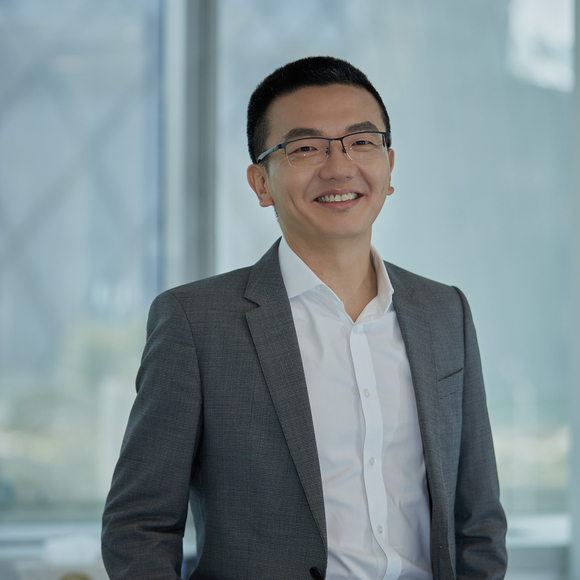
Jiemian News interviewes YANG Zhan, Head of Investments at Coller Capital. He oversees the firm's investment activities in Asia and also serves as Executive Director and General Manager of Coller Capital's Beijing office.
Jiemian News: In which year did Coller Capital enter China? Looking back at its entry and development in the Chinese market, what have been the key milestones and major achievements?
Yang: Coller made its first investment in China in 2008 and remained active in the market for many years before establishing a physical presence. As its activity in the RMB and broader Asia-Pacific secondaries markets expanded, the firm formally set up a local presence in 2021 with the opening of its Beijing office.
Several milestones have since defined its development in China. In 2021, Coller opened its Beijing office, strengthening on-the-ground engagement with Chinese GPs, LPs and regulators. In 2023, it completed the first classic RMB-denominated GP-led transaction involving a healthcare portfolio managed by Legend Capital, valued at 315 million yuan. This was followed in 2024 by the final close of its first RMB-denominated secondaries fund managed by a global secondary investor, reaching 1.2 billion yuan. In 2025, Coller closed a 229 million yuan multi-asset GP-led transaction with GSR Ventures, underscoring its ability to execute highly structured RMB secondaries deals.
These milestones have translated into several key achievements. Coller has positioned itself as a pioneer in RMB secondaries and is recognized by local sponsors for its ability to deliver complex GP-led solutions. It has built a credible onshore platform capable of underwriting Chinese portfolios with specialist expertise while applying global best practices. At the same time, the firm has developed deep partnerships with leading Chinese private equity and venture capital managers across multiple sectors.
Jiemian News: As China continues to advance financial opening-up, what development opportunities and benefits has your firm gained in this process? What role have foreign financial institutions played in the development of China's financial market?
Yang: We see foreign firms as complementing rather than compete with, domestic innovation — supporting China's broader goal of developing a robust, internationally recognised private markets ecosystem.
As the opening up continues we see broader access to strong domestic managers seeking flexible capital solutions and RMB and USD secondaries opportunities across both LP‑led and GP‑led transactions as funds mature. We are also seeing improved market infrastructure, enabling sophisticated deal structuring and cross‑border execution.
Jiemian News: 2026 marks the first year of the "15th Five-Year Plan." The Central Economic Work Conference emphasized a commitment to further opening-up and promoting win-win cooperation across multiple sectors. How does Coller Capital interpret financial opening-up and multi-sector cooperation in this context?
China's private markets continue to expand and institutionalise, creating more opportunities for liquidity solutions. In addition to this growing domestic pension, insurance and wealth capital makes efficient portfolio management tools — including secondaries — increasingly important. This is further affected by enhanced channels between domestic and international capital markets support collaboration, transparency and improved information flow.
Jiemian News: We noted that Coller Capital announced the expansion of its Hong Kong office at the end of last year. What is the significance of deepening your strategic presence in the Asia-Pacific region now?
Yang: Expanding our Hong Kong office underscores our long-term commitment to Asia-Pacific and also Hong Kong itself at a pivotal moment for the region’s private markets.
We opened our Hong Kong office back in 2012 and we remain deeply committed to the city and it is a strategic hub for cross‑border capital flows between mainland China and global LPs.
Jiemian News: As China's financial market continues to open up, Coller Capital's business in the country has also evolved. In 2023, the firm launched its first foreign-funded RMB secondary fund (S fund) in Beijing. What new opportunities and challenges are you currently facing in China?
Yang: We see a maturing secondaries ecosystem, with more GP‑led and LP‑led opportunities emerging. There is strong appetite among high-quality local GPs for bespoke liquidity solutions. Growing interest from domestic investors in using secondaries to improve risk management, and liquidity.
Jiemian News: Which sectors and types of transactions is Coller Capital currently prioritizing? Have there been any recent projects with significant progress?
Yang: Coller underwrites a broad range of managers and fund strategies in China and globally, with a consistent focus on diversified, high‑quality portfolios managed by experienced sponsors, covering both LP-led and GP-led transactions. We do not comment on individual deals.
Jiemian News: Attracting more foreign institutions and long-term capital to operate in China is a long-term and important task. In your view, what are the key factors to achieving this goal? What recommendations would you offer?
Yang: Long-term capital thrives where markets are predictable, transparent and deep. China continues to develop along those dimensions, and the growth of its secondaries market is an important part of that evolution.