Regulators are reshaping the architecture of cross-border finance, what does this mean for international professional services firms?

by DU Meng
As China continues to push forward financial reform and opening-up, the regulatory framework governing its capital markets is undergoing a quiet but far-reaching shift. A recent move by the China Securities Regulatory Commission (CSRC) to expand the pool of accounting firms eligible to audit A+H-share listed companies — using a "quality-first" mechanism rather than simple numerical expansion — is one sign of how regulators are reshaping the architecture of cross-border finance.
What does this mean for international professional services firms? And how should foreign institutions respond as the Chinese mainland and Hong Kong markets become more closely integrated?
Jiemian News spoke with Dr. Julie Laulusa, Managing Partner of Forvis Mazars China, about how China's financial opening is evolving and what it means for global firms.
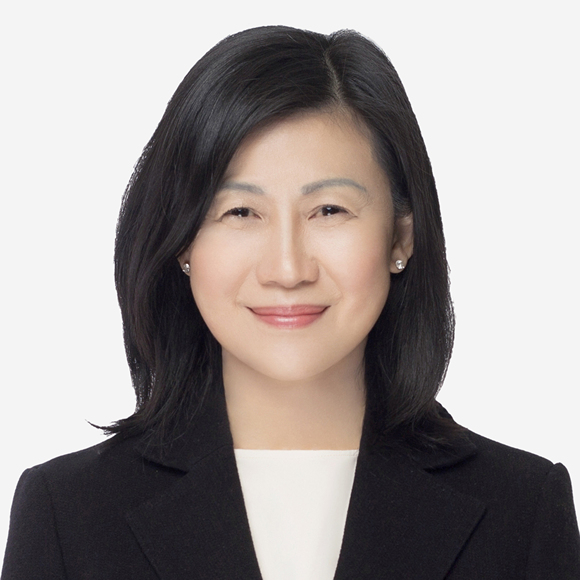
Jiemian News: When did Forvis Mazars enter China, and how has its business evolved over time?
Laulusa: Forvis Mazars was founded in Rouen, France, in 1945, and we entered the Chinese market in 1997, opening our first office in Beijing. We expanded to Shanghai in 2002 and Guangzhou in 2007, building a network across northern, eastern and southern China. In 2023 we also established a shared services center in Xi'an, which strengthened our ability to serve clients in central and western China.
Looking back, our development in China has broadly gone through two phases.
The first coincided with China's deepening opening-up. Multinational companies were setting up manufacturing operations and expanding their presence in China, and during our first decade here we focused on helping them establish and grow their businesses — from investment structuring and compliance to financial and tax advisory work. We were involved in many of the key moments when foreign companies built factories, expanded operations or carried out mergers and acquisitions in China.
The second phase began around 2012, when Chinese companies started to go global at a much faster pace. That was when we built our Global China Services platform, which now spans more than 60 countries across five continents. It has become the largest international business network within our group, dedicated to supporting Chinese companies in overseas investment, M&A and international operations.
In 2016, we partnered with audit firm Zhongshen Zhonghuan, expanding our China team to about 5,000 professionals. In 2024, the two sides formally established the Zhongshen Zhonghuan–Mazars International Alliance, bringing together more than 5,600 professionals across 40 offices nationwide. Today our clients range from multinational corporations and leading Chinese enterprise groups to global brands and companies across the international automotive supply chain. We also work closely with local governments in places such as Shanghai, Xi'an and Hainan on cross-border investment and business-environment initiatives.
Jiemian News: How has China's financial opening created opportunities, and what role do foreign institutions play in its capital markets?
Laulusa: China's financial opening has been gradual, institutional and forward-looking. As an international professional services firm that has been in China for decades, we have experienced this evolution firsthand.
One of the most powerful drivers has been the growing two-way flow of capital. Chinese companies are investing abroad, while foreign capital continues to enter China in a more steady and structured way. That has created sustained demand for cross-border auditing, M&A advisory, tax structuring and risk management. Our global China team plays an important role in helping Chinese companies build international operations, while also supporting European and other international firms as they navigate the Chinese market.
At the same time, China has been building a far more transparent, data-driven and "penetrative" regulatory system. In recent years the country has moved toward real-time, technology-enabled supervision. Initiatives such as the nationwide rollout of the fourth phase of the Golden Tax System and the trial of automated verification of audit reports have significantly increased the connectivity between tax, banking and audit data. This has raised the bar for quality control, technical capability and cross-border coordination, pushing the entire profession to become more sophisticated.
Another important shift is the convergence of Chinese accounting and sustainability disclosure standards with international rules. The release in 2024 of China's basic sustainability disclosure standards — closely aligned with IFRS S1 and S2 — marked China’s entry into a more globalized framework for ESG reporting. As companies pursue cross-border financing and international listings, demand is growing for services related to standard conversion and sustainability assurance.
In this environment, foreign firms bring global experience, strong quality-control systems and international comparability, which help improve transparency and governance across the market.
Jiemian News: 2026 marks the start of China's 15th Five-Year Plan. How do you interpret the emphasis on opening-up and multi-sector cooperation in finance?
Laulusa: What stands out is that financial opening is no longer just about market access. It has become a systemic project that links finance with industry, technology, the green transition and corporate governance.
The role of finance is shifting from simply facilitating capital flows to providing long-term, stable support for industrial upgrading, technological innovation and the global expansion of Chinese companies. That means cross-border financing, risk management and professional services need to be closely integrated with manufacturing, digitalization and low-carbon development.
In this context, "win-win cooperation" is increasingly about alignment — of rules, standards and ecosystems — rather than just individual transactions. Areas such as green finance, sustainability disclosure, cross-border M&A and supply-chain restructuring require close collaboration among financial institutions, companies and professional service providers.
The emphasis on high-quality growth also brings long-term capital into sharper focus. Patient investors and long-horizon capital thrive in an environment that is stable, transparent and internationally aligned. That kind of framework not only attracts global investors to China, but also supports Chinese companies as they expand abroad.
Jiemian News: What are the key conditions for attracting more foreign institutions and long-term capital?
Laulusa: What foreign institutions care about most is whether the system is convenient, internationally compatible and predictable. A stable and transparent regulatory environment is essential, especially when policies are applied consistently across regions and interpreted in a clear and coherent way. That kind of consistency gives foreign firms the confidence to make long-term commitments in China.
Talent is another critical factor. The ability to attract and retain international professionals depends not only on career opportunities but also on practical issues such as visas, taxation, social security coordination and access to international schools. These details have a real impact on whether global professionals choose to build their lives and careers in China.
Ultimately, it is institutional opening-up — aligning rules, standards and supervisory practices with international norms — that anchors investor confidence. As financial regulation becomes more modern, digital and transparent, long-term capital gains greater certainty about operating in the Chinese market.
Jiemian News: The CSRC plans to expand the list of firms eligible to audit A+H-share companies. How do you see this move?
Laulusa: This is not a simple expansion in numbers. It is a quality-driven adjustment to the supply of cross-border audit services. The selection criteria focus on scale, quality-control systems, international networks and cross-border experience, and there is a dynamic management mechanism to ensure standards remain high.
It aligns with the direction of higher-quality capital-market development and deeper integration between the mainland and Hong Kong. As regulatory expectations become more international and data-driven, the ability to conduct cross-border audits and respond to penetrative supervision becomes increasingly important. The new mechanism should improve competition and strengthen investor confidence.
Jiemian News: What further reforms would you like to see as China continues to open its financial markets?
Laulusa: Looking ahead, the internationalization of the renminbi will need to move in step with further opening of the capital account. A more convenient cross-border financial environment would make RMB assets more attractive to global investors.
Greater diversity in financial products would also deepen the market and give investors more choice. Just as opening consumer markets decades ago helped domestic brands grow, more competition and variety in financial services can have similarly positive effects.
At the same time, regulatory modernization should continue. The shift toward real-time, technology-enabled supervision — from tax systems to audit verification — makes it possible to open the market further while keeping risks under control.
Taken together, these trends point toward a more mature, transparent and globally integrated Chinese financial system.