Growing premium homegrown brands are reshaping Shanghai's image.

Photo from Heeya's Xiaohongshu vlog
by LOU Qiqin
When South Korean influencer Heeya says she "really loves Shanghai", it is not the skyline or the food she is talking about, but the city's growing appeal as a shopping destination for foreign visitors.
Heeya, who documents her food, travel and shopping routines around the world, is no stranger to the city. She visits every few months, and even when travelling elsewhere in China for work, she often makes a point of stopping over to shop.
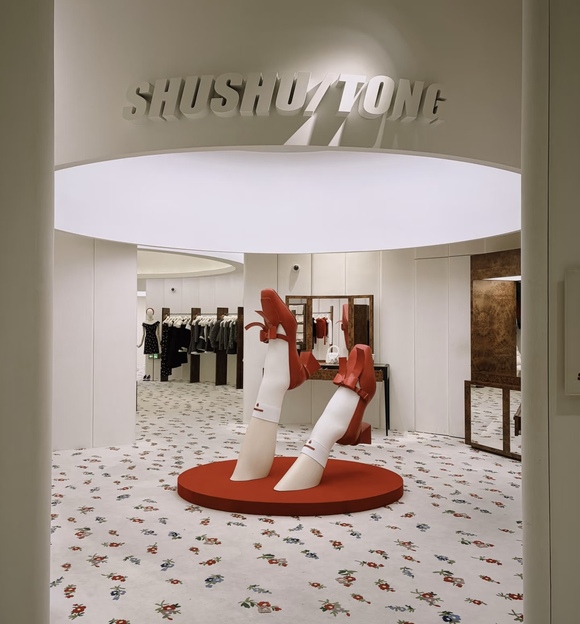
Her previous visit was in June 2025, when she stopped by the Shanghai store of Chinese designer label SHUSHU/TONG, a brand that has built a following among South Korean visitors. The store's cream-cake installation and floral wallpaper featured prominently in her posts, and she left with a knit top and a pair of earrings, later saying she had been won over by the brand's cute and refined design details — a stop she would repeat on her most recent trip.
Over the past decade, Shanghai has emerged as a base for a new generation of Chinese designer brands, many of them internationally trained and positioned above mass-market domestic labels. Backed by fashion weeks, multi-brand boutiques and visually driven retail spaces, these brands have found both visibility and commercial traction in the city.
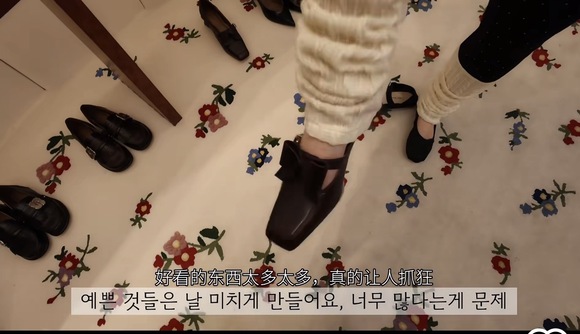
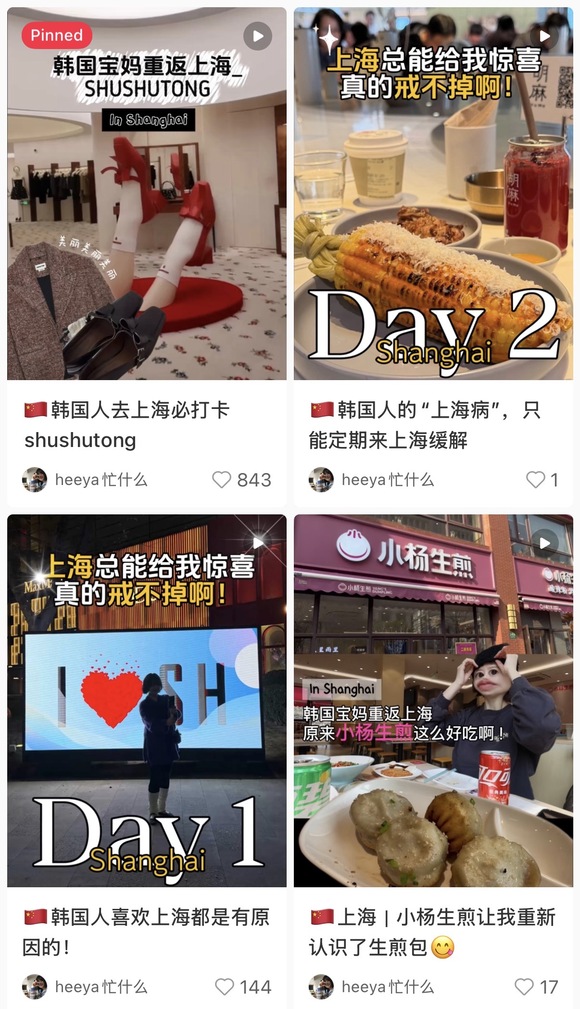
Six months later, Heeya's return to Shanghai again revolved around SHUSHU/TONG. In a standalone video, she described the label as a "must-visit stop for Koreans in Shanghai", joking that despite barely wearing items from her previous visit, she still ended up buying a coat and shoes.
"I've come across posts by Korean customers taking photos in our store while wearig our clothes," said JIANG Yutong, co-founder of the brand, in an interview with Jiemian News. Founded in 2015, SHUSHU/TONG opened its first physical store in Shanghai, with dresses typically priced between 2,000 and 5,000 yuan.
Since China began offering visa-free entry to South Korean travellers on a trial basis in late 2024, the brand has seen a steady rise in Korean visitors. From January 2025, it began staffing sales associates who can communicate in Korean, and said Korean shoppers now account for about 30 per cent of in-store traffic.
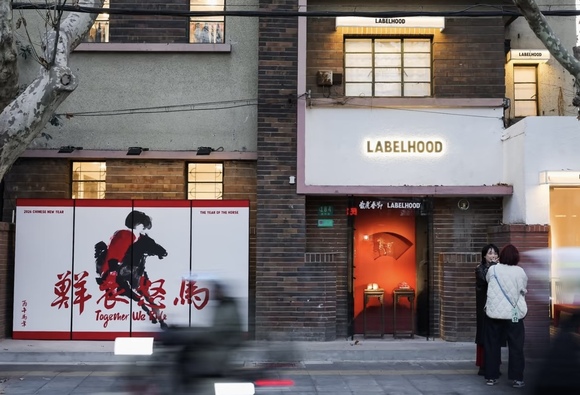
Another popular destination for Korean visitors is LABELHOOD, a Shanghai-based multi-brand boutique clustered around the Julu Road area. The retailer specialises in Chinese independent designers and has built a reputation for spotting emerging talent, drawing a growing overseas clientele.
Brands such as SHUSHU/TONG and LABELHOOD illustrate how China's new generation of premium domestic labels is gaining traction with foreign consumers. Rooted in Shanghai, they first gained exposure through industry events before expanding through boutiques and shopping malls, increasingly propelled by word-of-mouth among overseas visitors.
As China extends visa-free entry to more countries, the number of foreign tourists visiting Shanghai continues to rise, reinforcing this cycle. Growing overseas attention helps lift brand visibility, while these labels in turn are becoming part of the city's appeal for repeat visitors.
On Anfu Road, Shanghai-born brand Lost in Echo is also seeing a rising share of overseas customers. Founded in 2018, the label began with footwear and later expanded into bags, accessories and ready-to-wear, gaining visibility on overseas social media platforms.
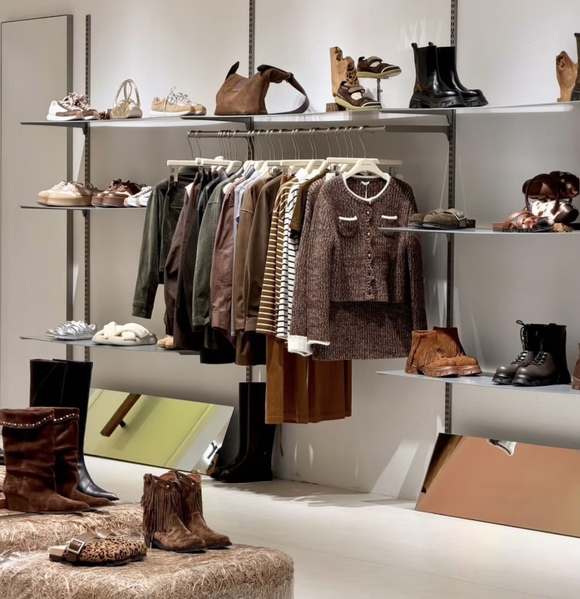
Several Shanghai-based brands said they have adjusted staffing, language support and payment options to accommodate foreign shoppers, reflecting a broader effort to make in-store experiences frictionless. Lost in Echo has also tweaked its inventory, adding more loose-fitting styles and larger sizes after observing demand from regions such as Southeast Asia and the Middle East.
Foreign shoppers interviewed by Jiemian News said Shanghai stands out for its convenience, from service and payment options to the breadth of brands available. Lulu, an Italian shopper, said she frequently buys Chinese designer labels including MAYALI, Yingpei Studio, FENGYI TAN, STAFFONLY and FFIXXED STUDIOS.
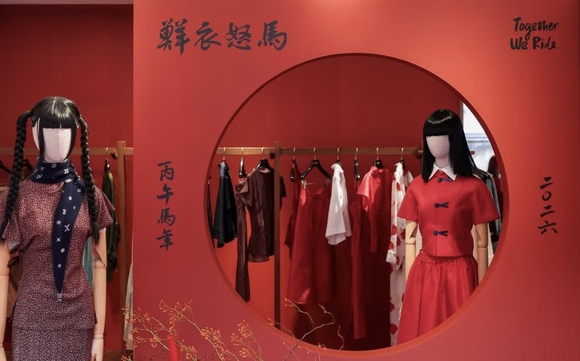
"They're creative, comfortable and well made," she said, adding that friends in Europe often ask about her clothes.
Some visitors said they arrived with specific brands in mind, only to discover many more once they started exploring. For them, Shanghai's appeal lies less in a single store than in a dense, walkable ecosystem of homegrown designers — one that keeps pulling shoppers back.