Shanghai's inbound consumption is shifting from experience-led spending to needs-driven, destination-oriented purchases, with bespoke fine jewelry emerging as a potential breakout segment.

The Yuyuan Garden area has long been a hub for jewelry trading and processing in Shanghai. Photo by
by LOU Qiqin
When Jakob, a German engineer, decided to commission a pair of rings for himself and his long-time girlfriend, he expected to work with a jeweler in Europe. Instead, a friend pointed him to a small jewelry studio in Shanghai.
The recommendation caught him off guard. "I assumed he would suggest a German brand, or at least something in Europe," Jakob said. But his friend, who had previously ordered a diamond ring from the same studio, was insistent. After seeing photos of the finished piece and learning that others in their circle had also placed orders there, Jakob decided to get in touch.
"My friend said that, like many things made in China, the pricing was attractive," Jakob said. "But more importantly, the workmanship was excellent — in some ways better than what you get abroad."
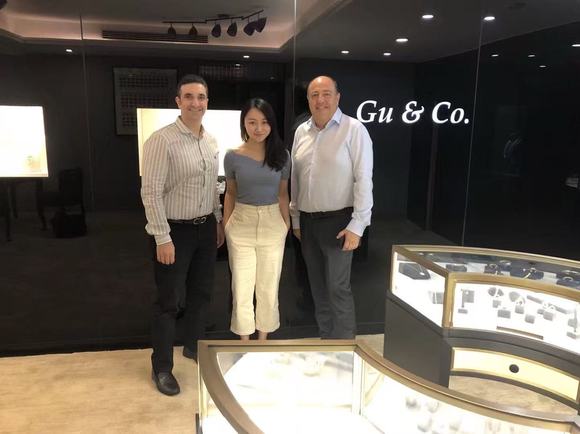
The studio, Gu&Co., is based in Shanghai's Putuo district and was founded in 2017 by jewelry designer GU Kaiyi. Gu said the studio now handles about 25 to 50 orders a month, with average order values above 10,000 yuan (US$1,400). Roughly 10% of clients are overseas customers, and some commissions run into seven figures.
After several rounds of online discussions, Jakob ordered a pair of minimalist 18-karat white-gold rings for 13,500 yuan, with a four-week turnaround. He said the delivery time was comparable to Europe, while the price was nearly half.
"When I received the rings, I felt confident recommending the studio myself," he said, pointing to the polish and inner curvature as details that exceeded his expectations.
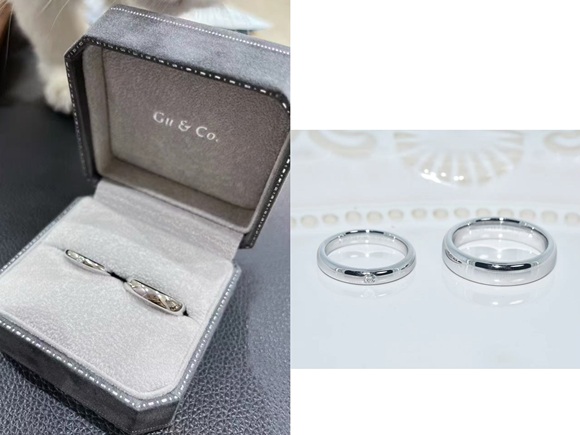
Gu said most foreign clients already have some awareness of Shanghai's made-to-order jewelry scene before reaching out, often through personal recommendations or social media. Many know that simpler designs, such as plain bands, offer particularly good value when made locally.
One client, an elderly French woman, placed an order entirely online after being referred by a friend. She commissioned a technically demanding gold ring as a wedding gift for her daughter, paying about 1,300 euros without ever meeting Gu in person.
Jewelry customization, unlike many consumer services, involves high prices, long communication cycles and fixed delivery schedules. Industry insiders say trust — often built through word of mouth — is critical.
Several foreign customers said they preferred to start with smaller purchases before committing to custom orders.
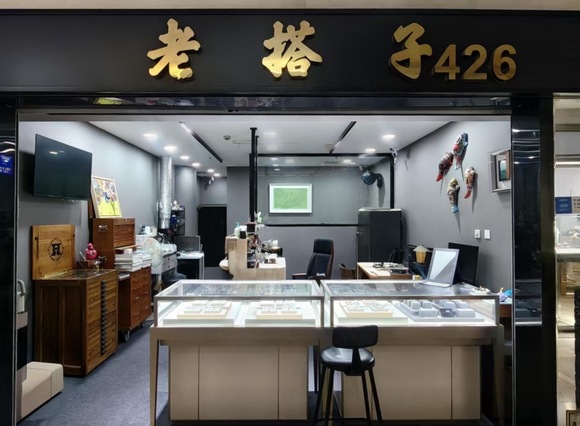
That approach has also benefited retailers in Shanghai's Yuyuan Garden area, sometimes referred to as "Shanghai's Shuibei," after Shenzhen's jewelry hub. YU Daren, owner of a shop known as Laodazi, said some foreign customers first buy ready-made pieces to assess quality.
"Once they've seen the craftsmanship, they're convinced," Yu said. His shop does not compete on volume, and pricing remains high even by domestic standards.
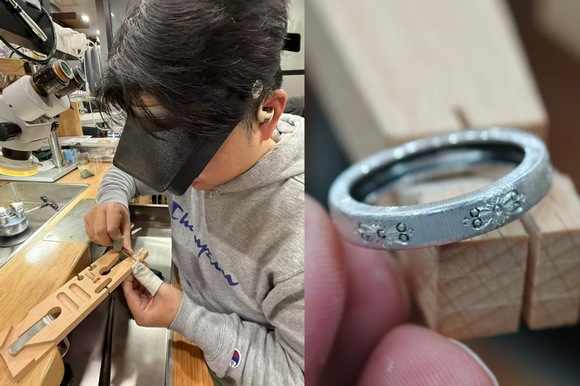
Yu said foreign customers are increasingly aware that jewelry made in Shanghai can be refined, design-forward and internationally styled. His shop offers services ranging from pet-inspired pendants to seasonal silver designs, alongside more elaborate pieces combining jade, pearls and gemstones.
Some overseas customers discovered the shop through Xiaohongshu, China's lifestyle platform. One Singaporean mother and daughter flew to Shanghai during a school holiday after online consultations, seeking a jeweler capable of turning the daughter's design sketches into finished pieces — something they had struggled to find elsewhere.
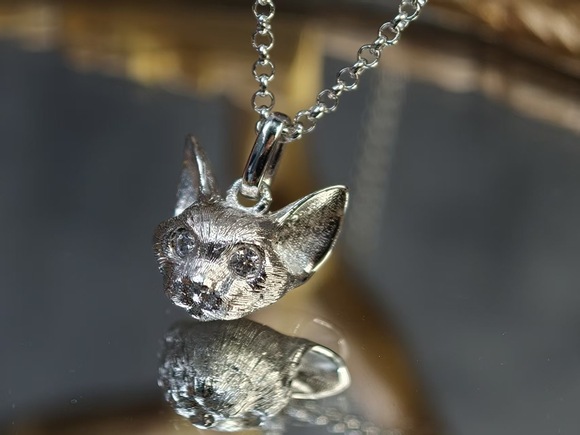
"The hardest part is communication," Yu said. Many jewelers, he added, lack the language skills or patience required for repeated, detailed discussions with foreign clients.
Several shop owners said they sometimes turn away overseas customers because of communication barriers. Bespoke jewelry often involves multiple revisions, and translation tools alone are rarely sufficient.
By contrast, Shanghai benefits from a relatively international workforce and a dense industry ecosystem. Huangpu district, which includes the Yuyuan Garden area, is developing an international jewelry and fashion hub, with more than 400 related companies clustered there.
Despite growing interest, foreign customers remain a small share of Shanghai's jewelry trade. Many visitors only learn about customization options after arriving, and short stays often make ordering impractical.
Merchants said more targeted international promotion, better cross-border shipping options and smoother payment solutions could help unlock demand. While many shops now accept international payment platforms, frictions remain.
Even so, shop owners and customers alike point to a broader shift. As Shanghai's inbound consumption moves beyond sightseeing and novelty purchases, bespoke services — built on trust, skill and reputation — are becoming part of the city's appeal to foreign visitors.