As visa-free travel draws more foreigners to Shanghai to have clothes tailor-made, bespoke tailoring is moving from a niche craft to a practical part of the city's appeal.

Photo courtesy of Oh Young-joo
by ZHOU Fangying
For Oh Young-joo, a South Korean national living in Shanghai, the idea of making a qipao first took shape while watching In the Mood for Love. Maggie Cheung's figure moves through narrow corridors, the fabric close to the body yet restrained. The beauty, she felt, was inseparable from posture, emotion and daily rhythm. It made her realize that the qipao is not an exaggerated "Chinese element," but a garment designed for the wearer.
She had encountered Chinese clothing before. Like many foreigners living in China, she was familiar with hanfu culture, but found it closer to a complete, stylized presentation. What drew her to the qipao was precisely the opposite: it does not demand to be watched, but belongs to everyday wear. That was why she did not want to merely "try it on," but to make one of her own.
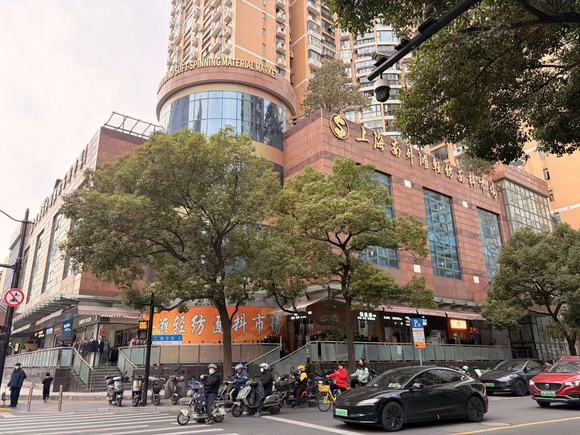
After settling in Shanghai, the idea became tangible. Oh, who previously studied journalism and communications in Nanjing and later entered the skincare industry, did not approach the city as a tourist. Guided by her Shanghai-born boyfriend, she walked into the South Bund Fabric Market for the first time. The space is not packaged as a cultural attraction. It operates around fabric, measurements and workmanship.
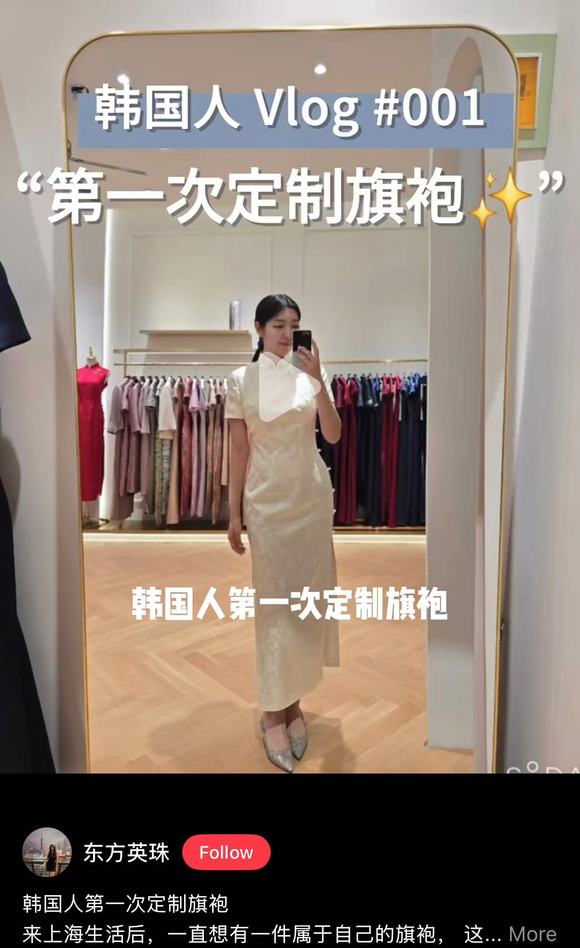
She tried on and compared options across several stalls, eventually choosing a white silk qipao. The process was straightforward yet body-centred: measuring, confirming details, all focused on fit. The final price exceeded 2,000 yuan, but she felt it was worth it. "Silk feels the best on the body. I didn't want any regrets," she said.
Two weeks later, when she put on the finished garment, her first sensation was not amazement, but a light certainty. The dress did not overpower her presence. It made clear that it existed for her.
She recorded the moment and shared a short vlog on Xiaohongshu, where she posts under the name "Dongfang Yingzhu." The video is simple: moments of checking the fit in front of a mirror, quiet satisfaction, no heavy editing. The garment worked the first time it was worn.
With the Lunar New Year approaching, Oh is preparing to return to South Korea. She plans to take photos in the qipao before leaving. When she sent the pictures to her mother, the response was not to treat it as something foreign, but to ask carefully about the fabric and cut. Oh is already planning to bring her mother to Shanghai next time to make a qipao of her own.
When she first entered the South Bund Fabric Market, it was hard to connect the noise and order she saw with anything like "urban memory." What she encountered was an efficient system: bolts of fabric hanging like walls, mirrors pushed deep into stalls, shopkeepers asking practical questions — what occasions it would be worn for, whether she preferred a close or relaxed fit, how many days she could wait, whether rush service was needed. It felt less like a destination and more like a place where things are made.
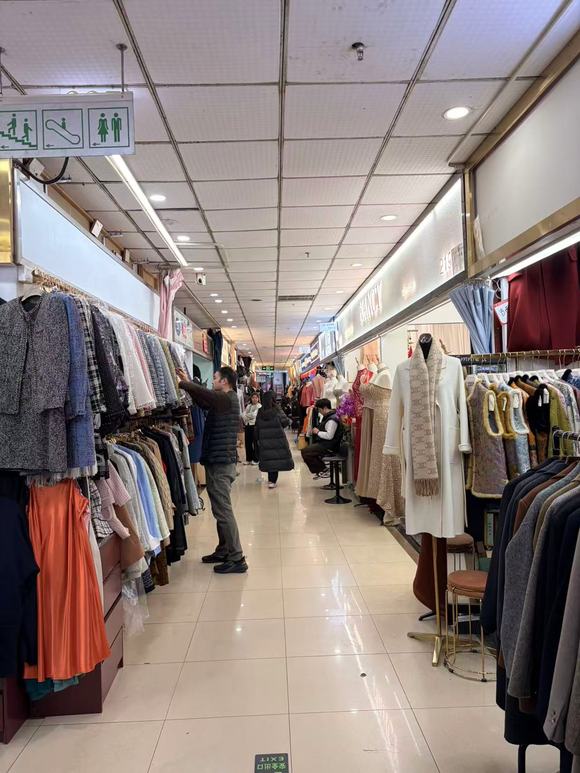
Placed back into Shanghai's timeline, this "bespoke" character is no accident. The market carries forward a long-standing fabric and garment-trading tradition from the Dongjiadu area. After relocation, it was initially focused on wholesale fabric. Only gradually did an ecosystem of garment-making take shape. A key turning point came after the 2010 World Expo, when increased flows of people and business brought more specific demands: fit, delivery time, craftsmanship and communicable details.
CHEN Dan, founder of Dani Design, has operated at the South Bund Fabric Market for more than a decade. She now runs two stalls offering bespoke qipao, suits, coats and dresses. In her memory, the market was quiet at first. "The real change came after the 2010 Shanghai Expo," she said. "That's when more people started coming to have clothes made."
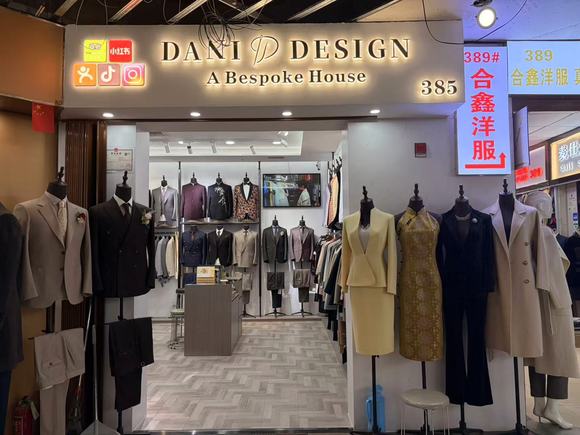
She believes the market was not first "discovered" by local consumers. "Many Shanghai residents don't really know this place," she said. "It was foreign visitors who, through overseas social media, began treating it as somewhere you must go to in Shanghai to make clothes." At Dani Design, a qipao typically costs between 1,000 and 3,000 yuan depending on fabric. Overseas, similar bespoke garments often cost several times more. Today, domestic and overseas orders account for roughly half each.
Beyond price, repeat business is common. Foreign customers often order one or two pieces at a time, while some continue placing additional orders after confirming the fit. Chen cited a recent client who returned to Shanghai and added 30 shirts using an existing set of measurements.
Over the past year, she has seen a clear link between rising foreign customers and changes in China's visa-free policies. "Some people are only in Shanghai for a few days, but they will still make time to come here to have clothes made," she said.
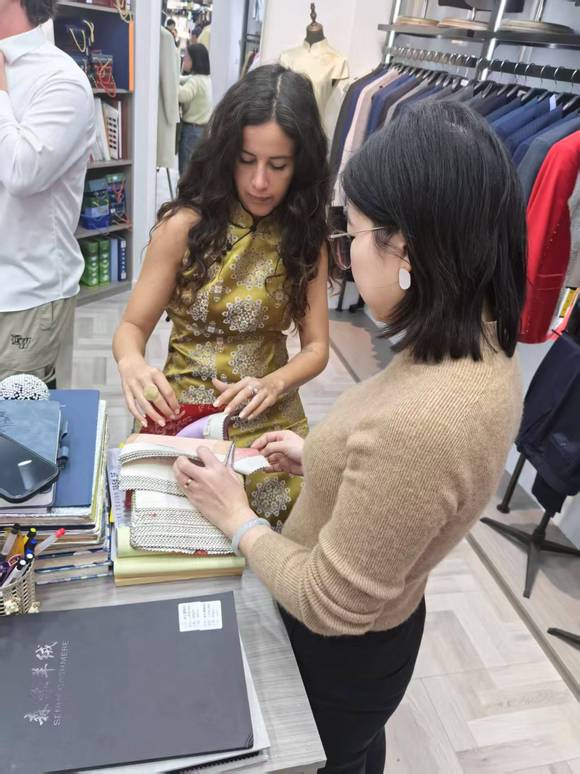
Official data support the trend. According to the National Immigration Administration, China expanded unilateral visa-free entry to 48 countries and mutual visa-free arrangements to 29 in 2025. Total cross-border trips reached 697 million, a record high. Visa-free foreign arrivals reached 30.08 million, accounting for 73.1% of inbound foreigners, up 49.5% year on year.
As visa-free travel continues, short-stay, small-batch and high-efficiency bespoke demand is becoming more visible at the South Bund. Chen observes that these customers do not necessarily see tailoring as an "experiential" purchase, but as a rational choice under time constraints. Tight schedules amplify the need for certainty. Ready-to-wear sizing can be inconsistent, while alterations are unpredictable. Bespoke clothing, by contrast, offers clearer expectations on price, fit and delivery.
LIU Bin has worked in bespoke suiting for more than three decades, from Dongjiadu to the South Bund. He now runs Tina Suit Custom, which occupies four stalls in the market, and also operates a suit tailoring and rental store on Nanjing West Road.
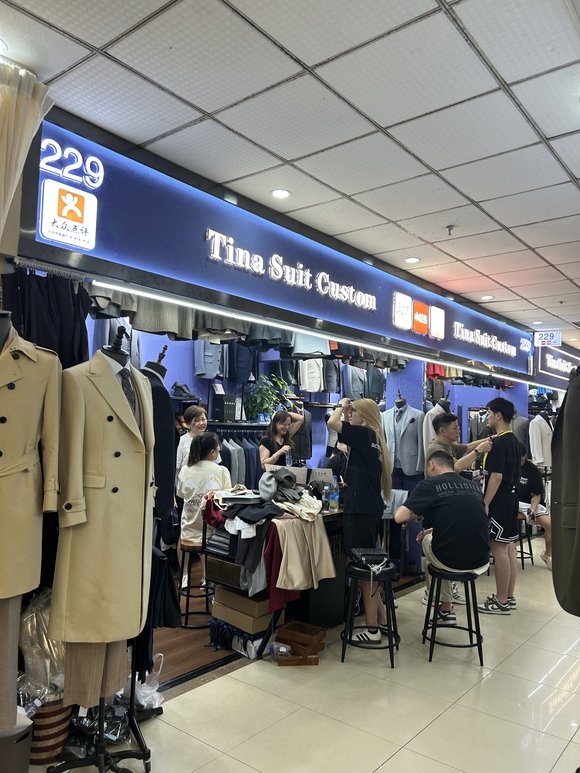
For overseas clients, Liu sees tailoring as a practical necessity. "Overseas customers often have different body proportions from those assumed in China’s ready-to-wear sizing," he said. Even garments labelled as European cuts often fit poorly. Bespoke tailoring, by contrast, uses comprehensive measurements to adjust for individual proportions. "Everyone's data is different. Only then does the garment really fit."
To accommodate short stays, his shop maintains rush-order capacity. Under suitable conditions, a full suit can be completed within two days. This relies on an in-house team of more than a dozen experienced tailors, with cutting, sewing and alterations all done in Shanghai. Larger corporate orders can be handled by a nearby factory.
Once finished, Liu often delivers the suit to the client's hotel for fitting, confirming overall fit and details. If adjustments are needed, the garment is taken back for a second round. The aim is not speed for its own sake, but reducing uncertainty through front-loaded measurement and fitting.
Apart from major holidays, Chen is at her stall almost every day. As founder, designer and front-line contact, frequent interaction with overseas clients has become routine. Without formal English training, she relies on gestures and reference images. "As long as the client can show me pictures, I can usually lock down the plan," she said. Supported by a local tailoring team, she can sometimes deliver garments the next day.
This focus on efficiency and fit aligns with broader policy signals. In recent years, policymakers have emphasized upgrading service consumption and encouraging customized, personalized supply. Within that framework, clothing bespoke services are no longer a niche, but part of a higher-quality service consumption system — and an increasingly visible draw for inbound consumers.
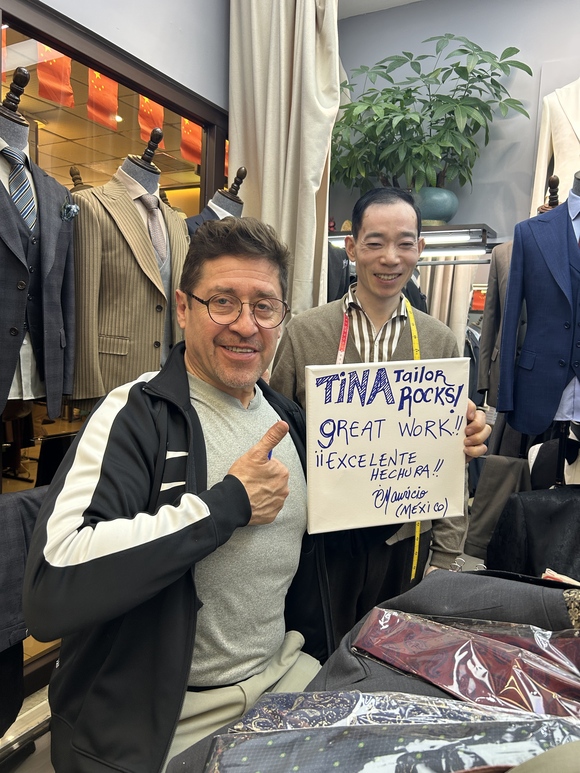
To help overseas customers find them, shop owners have experimented with marketing. Liu displays signatures and recommendations from foreign clients and places a Tripadvisor sign at his entrance. Chen often takes photos with clients upon delivery, encouraging them to tag the shop and leave feedback on social media. Word-of-mouth referrals have brought a steady stream of new orders.
Still, both see these efforts as individual. They hope the South Bund Fabric Market itself can emerge as a clearer city calling card. Only when the market is recognized as a whole by overseas consumers, they believe, can growth become more sustainable — and benefit more of the businesses inside.