The move may reflect slower growth at IKEA's retail business and mounting pressure on Livat's capital-intensive mall model amid weak consumption and intensifying competition.

Photo from Jiemian News
by WANG Tingting
After months of market speculation over a potential sell-off of its China mall portfolio, Ingka Centres has moved toward capital restructuring rather than an exit.
On Dec. 12, 2025, Ingka Centres said it had reached a strategic partnership with GoHigh Capital, a China-based private equity real estate investment firm, to establish a dedicated fund to jointly own three Livat meeting-place shopping centers in Wuxi, Beijing and Wuhan, subject to regulatory approval.
Under the agreement, GoHigh Capital will act as fund manager and executive partner, while Ingka Centres will serve as a general partner and cornerstone investor. Ingka will continue to own the Livat brand and operate the malls, preserving brand standards and day-to-day management.
"This partnership model allows us to maintain a long-term presence in these cities," Joyce Zhu, president of Ingka Centres China, told Jiemian News, adding that investing in and optimizing assets is a common strategic move within Ingka's global business model. The arrangement, she said, enables Ingka to leverage its operating expertise while freeing up capital for reinvestment.
The three Livat centers have been operating for years with established local positions and experienced management teams, Zhu said. Ingka declined to disclose equity stakes or valuation details, citing commercial sensitivity.
The move marks a clear shift from earlier market expectations. Previous reports had suggested Ingka was exploring a bundled sale of its 10 Livat malls in China, with the Wuxi, Beijing and Wuhan properties forming a first batch potentially valued at around 16 billion yuan, and insurance-backed funds cited as possible buyers.
Since entering China in 2009, Ingka Centres has developed and operates 10 Livat shopping centers across major cities, with total investment of about 27.5 billion yuan and roughly 943,000 square meters of gross leasable area. The China portfolio remains one of Ingka's largest outside Europe.
One industry source told Jiemian News that the shift from a mooted full disposal to a fund-based co-ownership structure may reflect deal constraints rather than a strategic reversal. Insurance-backed capital typically demands rigid return profiles and has limited appetite for joint ventures, making a fund structure a more workable option.
The source said such a structure can help bring in external capital and protect valuations through mechanisms such as senior and junior tranches, while underlying funding pressures persist amid slower growth at IKEA's China retail business and mounting challenges for capital-intensive shopping centers.
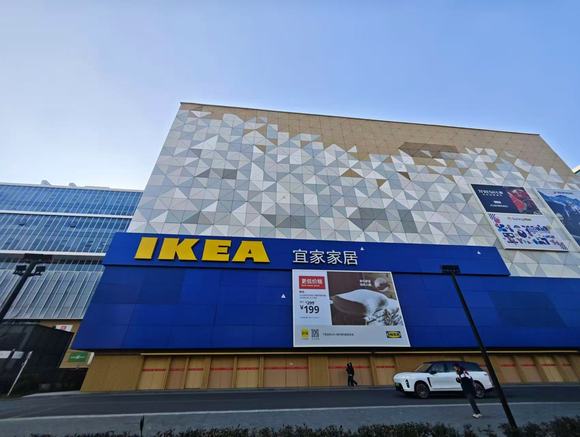
Ingka Centres and IKEA retail are both part of Sweden-based Ingka Group, which also operates an investment arm.
At the group level, Ingka reported global revenue of €41.45 billion in fiscal 2025, down 0.9% year on year, while net profit rose 75.1% to €1.41 billion, largely driven by cost controls and portfolio optimization. IKEA retail sales declined 1.6% to €39.0 billion over the same period.
Shopping-center operations in China have been comparatively resilient. In fiscal 2025, Livat malls recorded growth in both footfall and sales, with overall occupancy exceeding 97%.
The transaction also covers a series of asset and operational changes. IKEA China is set to open and operate a new store within Wuxi Livat, while the existing IKEA Wuxi property will be converted into new leasable space as part of the transaction. Zhu said Ingka Centres will continue to refine operations, optimize tenant mix and upgrade assets, including a planned renovation of Wuxi Livat.
Zhu said China continues to offer strong underlying momentum and long-term growth potential, adding that Ingka remains firmly committed to the market despite short-term pressures.