"To us, 'high-level opening-up' reflects not only broader participation, but also higher standards of openness, predictability, and governance that can underpin long-term growth."

by CHEN Jing
As China continues to advance the institutional opening-up of its financial markets, global financial firms are seizing the momentum of liberalization and steadily increasing their investment in the country.
Temasek, founded in 1974 and headquartered in Singapore, has 13 offices across nine countries, including three in China – Beijing, Shanghai, and Shenzhen. In recent years, its presence in China has deepened through a more localized approach. In 2021, it established True Light Capital, a wholly owned asset-management platform focused on China. This June, after securing a private fund management license in China, the firm completed the filing of its first onshore renminbi fund, focused on early-stage life-science investments – an example of how global institutions are blending international experience with the realities of China's market.
In a recent conversation with Jiemian News, SHEN Ye, Deputy CEO of Temasek China, said that "high-level opening-up" is not only about easing market access but also about building a more transparent, internationally aligned financial system. China's latest economic policies, she noted, aim to restore confidence and steer the economy toward high-quality growth – evidence of a clear commitment to resolving structural challenges. Temasek is particularly attentive to shifts brought about by China's changing demographics, which are driving a new wave of consumer and industry demand. And with that, Shen said, come opportunities.
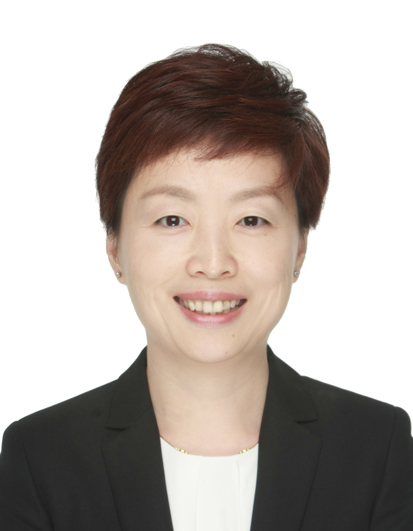
Jiemian News: When did Temasek enter China? Looking back, what were the key milestones in your development here?
Shen: Temasek's journey in China began in the 1990s, when several Singapore-based companies in our portfolio started to venture abroad and took part in China's industrialization. Keppel and Sembcorp invested in and helped develop landmark projects such as the Suzhou Industrial Park.
Temasek itself established a formal presence in China in 2004 and began making direct investments. Our development in China has naturally evolved with the broader shifts in the economy. In the early 2000s, as China opened up its financial sector, our investments primarily focused on sectors that serve as proxies for the country's economy, including banking and real estate. We took part in the restructuring of the banking system and invested in institutions such as China Construction Bank and Bank of China.
Since early 2010s, our portfolio began to shift towards emerging trends driven by consumption, such as internet economy, e-commerce, and non-bank financial services.
In the past decade, as China's economy has transitioned to one powered by domestic demand and innovation, we have focused on opportunities arising from this shift: sustainable development, enterprise software, consumer products/services, and emerging technologies.
Throughout this journey, partnerships have remained essential. In 2021, we established True Light Capital, a wholly owned asset-management platform focused on areas that align with Temasek's long-term strategy – particularly frontier fields such as green energy, healthcare, and emerging technologies. The aim is to support innovation and industrial upgrading while delivering steady returns for our investors.
Jiemian News: China has continued to push forward financial opening. How effective has this process been? And what role have foreign institutions played in it?
Shen: The Chinese regulators have introduced policies aimed at boosting confidence and driving high-quality development, and these moves signal a clear commitment to tackling structural issues. In recent years, efforts to build a stronger capital market have begun to show results. Policymakers are actively facilitating the participation of more medium- and long-term funds, especially from domestic investors.
At the same time, the enhanced "connectivity" between Hong Kong and the mainland improve access for institutional investors. Together, these initiatives have helped stabilize stock markets and asset prices, generating new wealth effect for households. That, in turn, supports more capital flow to the real economy and further promotes the vitality and innovation of private enterprises.
Jiemian News: What's Temasek's take on the term "high-level opening-up" put forward by the Chinese regulators? As China works to attract more foreign institutions and long-term capital, what do you see as the most important factors for success?
Shen: "High-level opening-up" can be interpreted as a move beyond basic market access and towards a more transparent and internationally aligned financial system. To us, "high-level" reflects not only broader participation, but also higher standards of openness, predictability, and governance that can underpin long-term growth.
China has already rolled out necessary policy packages to boost the economy, e.g. local government bond to recover balance sheets, trade-in programs to indirectly boost consumer spending, and a plan to promote services consumption. There are also pilot programs to open up sectors such as telecommunications, education, and healthcare, as well as a recent notice released in September that further facilitates cross-border investment and financing by easing foreign-exchange rules.
The recovery of confidence will take time and continuous effort to stabilize the property market and capital markets remains key.
Market competition and an open market are critical for economic development. At the same time, it is reasonable for the Chinese government to stress on building a unified national market, to avoid the inefficient resource allocation for excessive competition.
When it comes to attracting foreign institutions and long-term capital, it is not only about broadening access but also about creating the right environment that supports sustained investor confidence. Some considerations include policy clarity and consistency, deepening market reforms and regulatory transparency.
Jiemian News: As China continues to expand financial opening, what new opportunities does Temasek see – whether in new investment areas or business models? And what challenges do you face, such as regulatory shifts or intensifying competition? How do you plan to respond, and what suggestions do you have?
Shen: Temasek remains focused on China's long-term economic prospects. We invest with conviction and look for opportunities that align with structural trends, aiming to build a portfolio that is both resilient and forward-looking. Our investments are focused on four long-term structural trends: cross-industry digital technologies that enable Digitisation; products and services that enable Sustainable Living; new shifts in consumption patterns leading to the Future of Consumption; and the ever-increasing demand driven by Longer Lifespans.
As China's financial markets continue to open, we are focused on demand driven by China's evolving demographic. That brings opportunities in leading domestic and consumer brands with strong R&D capabilities, increased innovations in life sciences to meet growing healthcare needs, and the fast-growing green economy, such as in the new-energy vehicles and batteries space.
China's unique competitiveness of the open market and new consumption patterns have also sparked a wave of innovation. Companies are moving rapidly up the value chain, and intellectual property is becoming a decisive factor for success. Firms like Pop Mart and Insta360 illustrate these trends. As Chinese enterprises expand overseas, it is important for them to cooperate with local partners, invest and operate locally, instead of purely exporting products.
In the new energy sector, such as electric vehicles and batteries, Chinese companies take up close to half of the global market. We see opportunity in China's renewable-energy ecosystem as a result of strong fundamentals, substantial investments, technological innovations, and a robust supply chain.
In life sciences and biotechnology, China is approaching a "DeepSeek moment". The trends of an aging population and rising healthcare demands are further driving innovation across the industry. It is with this confidence in the opportunities within China's life sciences sector that we invested in Biosparc (China–Singapore Life Sciences Park), now under development with the Suzhou Industrial Park. Drawing on the park's deep industry base and global network, the project aims to create an innovation-driven cluster and is expected to open in 2026.
With lower funding costs, there are increasing opportunities for mergers and acquisitions in the areas we focus on. As interest rates decline, savings banks naturally look for higher-yielding products, favoring value-oriented strategies, including those emphasizing dividends. The domestic low-rate environment is also pushing demand for international asset allocation. If cross-border investment channels can be further opened up, it would support the global expansion of Chinese enterprises.
With a firm presence in China for two decades, Temasek has consistently adapted and evolved alongside the market. We remain focused on the economy's long-term prospects, and continue to invest with confidence.